

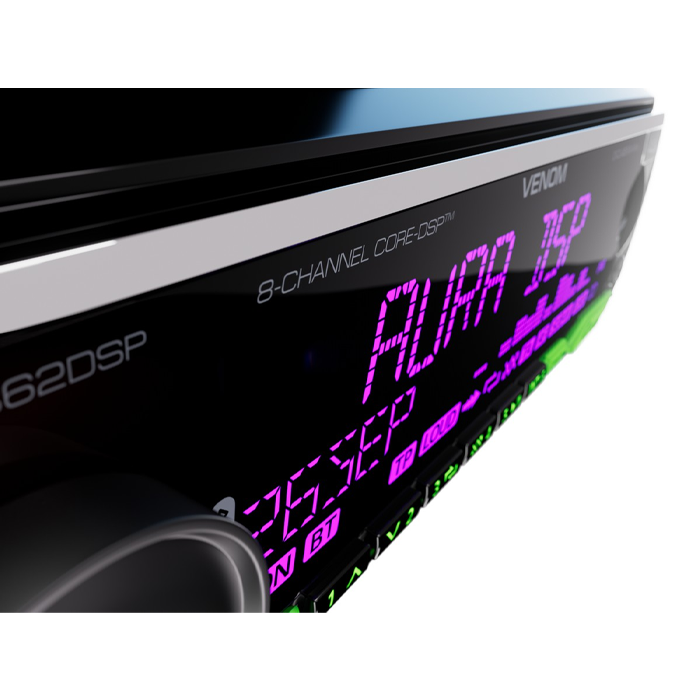

Powerful built-in class D amplifier.
- Maximum output power: 6×141W
- Nominal output power (at THD less than 1%): 6×71W
- Minimum speaker impedance: 4 Ohms
- USB connector with charging current: up to 1.2A
- Reading audio formats: Hi-res FLAC (24 bit/48kHz) , MP3, WAV, APE, AAC
RCA outputs: 4 pairs (8 channels)
- Maximum amplitude of the RCA output signal: up to 6 volts
PLATFORM: CORE-DSP
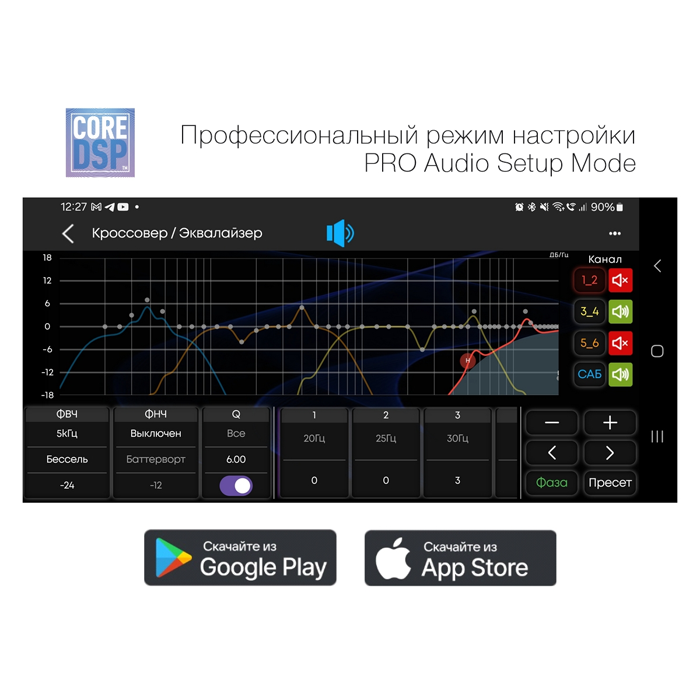
- PRO-mode settings
- Channel-by-channel time correction of the sound field (Time Alignment)
- 48-band parametric equalizer
- Q-factor adjustment for each band
8-way crossover:
- Channels 1-6: HPF / LPF: 20 Hz - 12.5 kHz / Disabled
- Channels 7-8: HPF / LPF: 10 Hz - 800 Hz / Disabled
- Roll-off slope: up to 48 dB per octave.
- Choice of filter type: Butterworth, Linkwitz-Riley, Bessel.
- Stereo mode for 7-8 channels
- Compatible with iOS and Android application
- Full Russification (menu and application)
- Built-in Bluetooth module (A2DP)
- RGB backlighting of the front panel (3 zones, 16 million colors)
- D-SWC (training resistive buttons on the steering wheel without an external adapter)
- Remote control: included
ATTENTION!
- The power wires must be connected DIRECTLY TO THE
- CORRESPONDING BATTERY TERMINALS using a copper cable with a
- cross-section of at least 4 mm (12GA)!
- Connection to the standard wiring or to the standard ISO connector is NOT ALLOWED!
Processor amplifier in head unit format
Testing the AurA Venom-D862DSP head unit with 8-channel DSP and 6-channel high-power amplifier
October 31, 2025
#Sources and GU#Budget#AurA
Whatever anyone says, it's still too early to write off classic head units. Moreover, they're no longer the same old "radio" units, and the capabilities of new head units are gradually approaching those of processor-based amplifiers.
Today we're reviewing a new model from AurA, which, firstly, contains a full-fledged 6-channel amplifier with a step-up power supply – this is already comparable to some "processors" in terms of its power potential.
Secondly, the Venom-D862DSP specifically uses a slightly more interesting processor platform than most common head units (called Core DSP in AurA models). I've encountered it before in the AurA Indigo-877DSP, but that one had a standard amplifier like any other head unit, while the combination with a powerful 6-channel amplifier is a relatively new addition to the lineup.
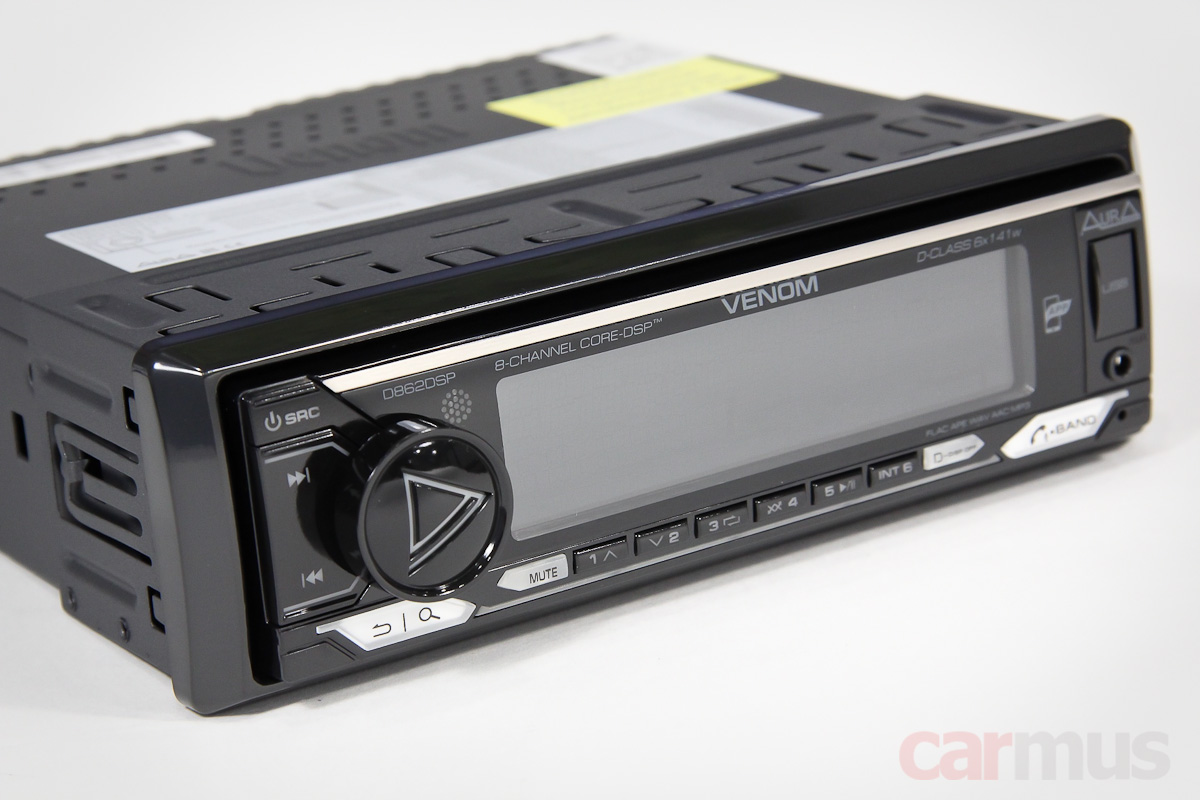
And yes, just so you know, the price of today's Aura Venom-D862DSP test unit at the time of testing was 10,990 rubles.
First acquaintance, design features
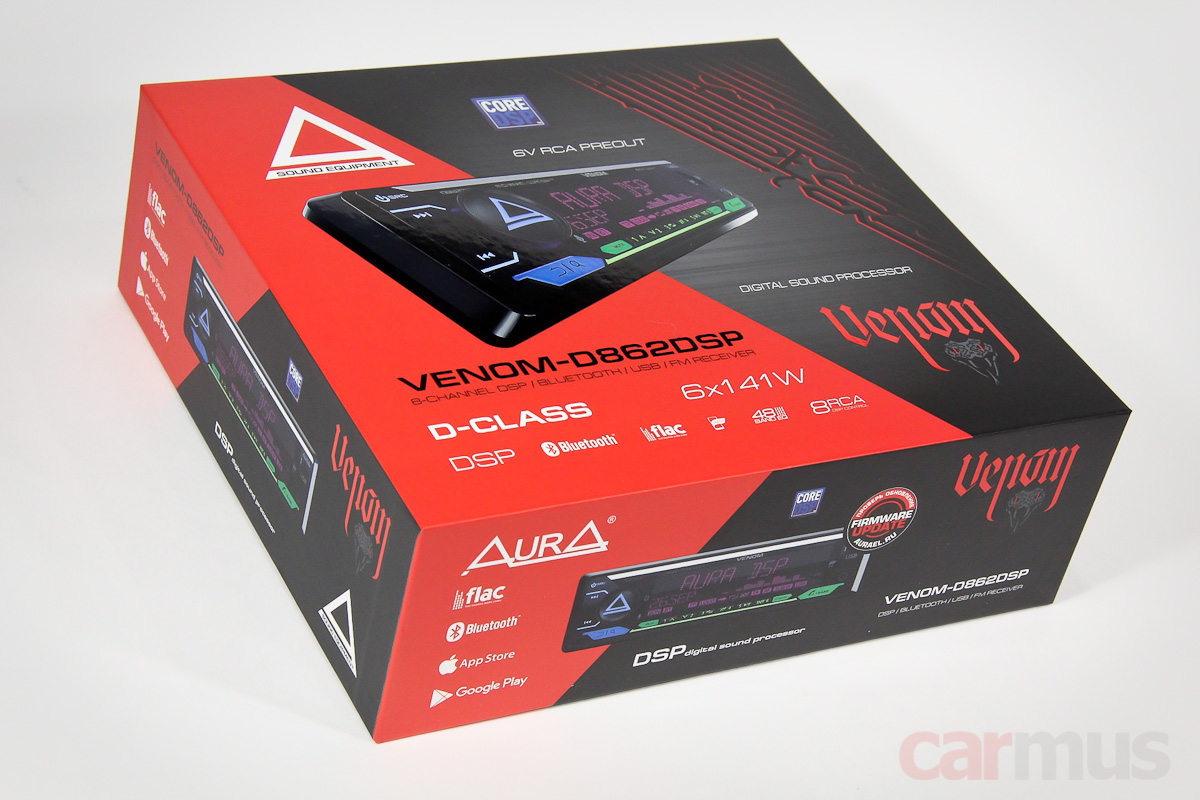
We meet "by clothes"; the device comes in pleasant packaging, in the so-called "gift" format.
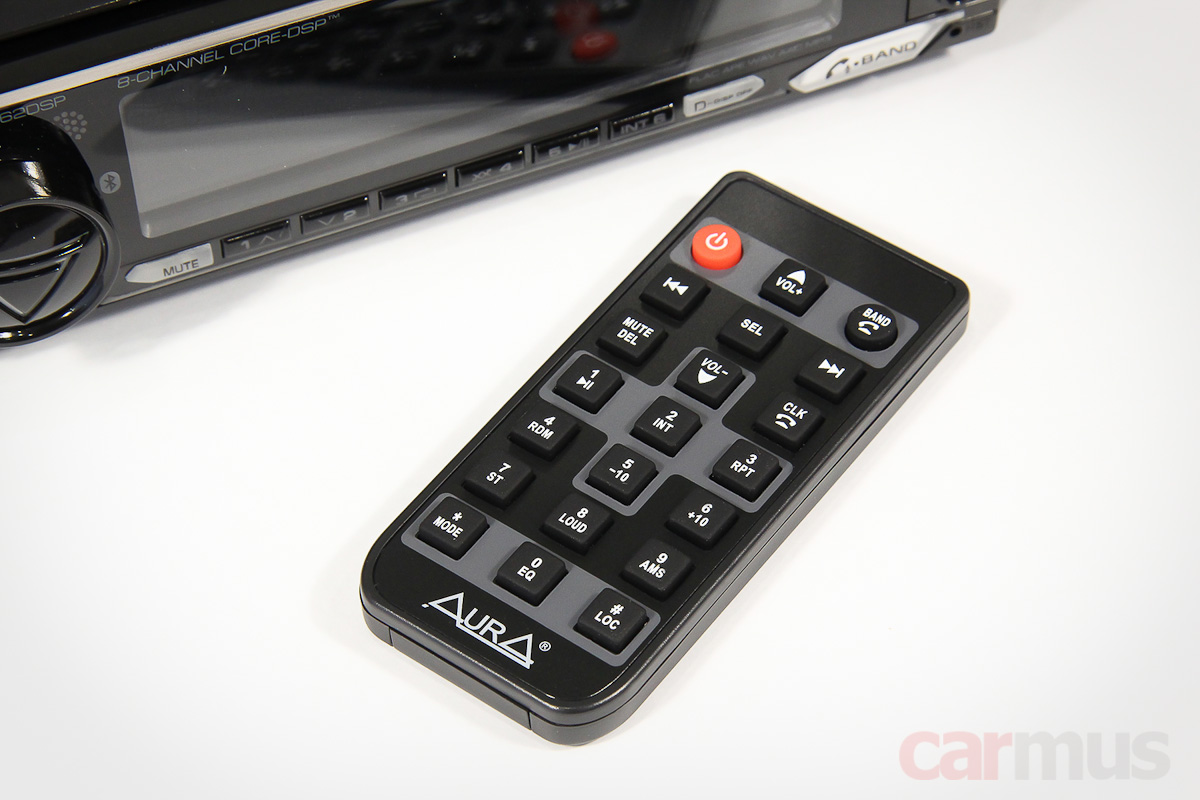
The kit includes a card remote control. It's simple, but has decent buttons, not a membrane one.
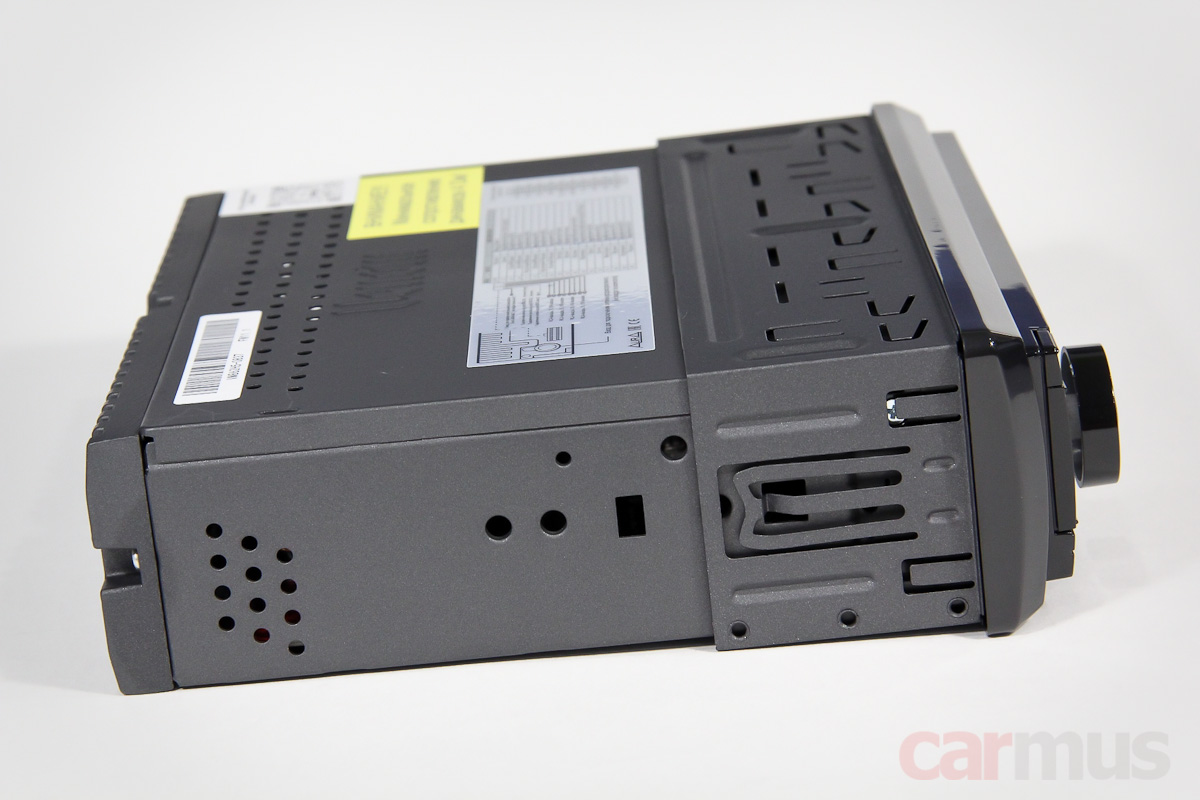
The unit is housed in a full-size 1DIN case. This is understandable—fitting six full-fledged amplifier channels into a smaller enclosure would be challenging. The dark thermal coating improves heat dissipation.
The connections are consolidated into two jacks: one for power and amplifier outputs, the other for low-current connections. And the antenna—that goes without saying.
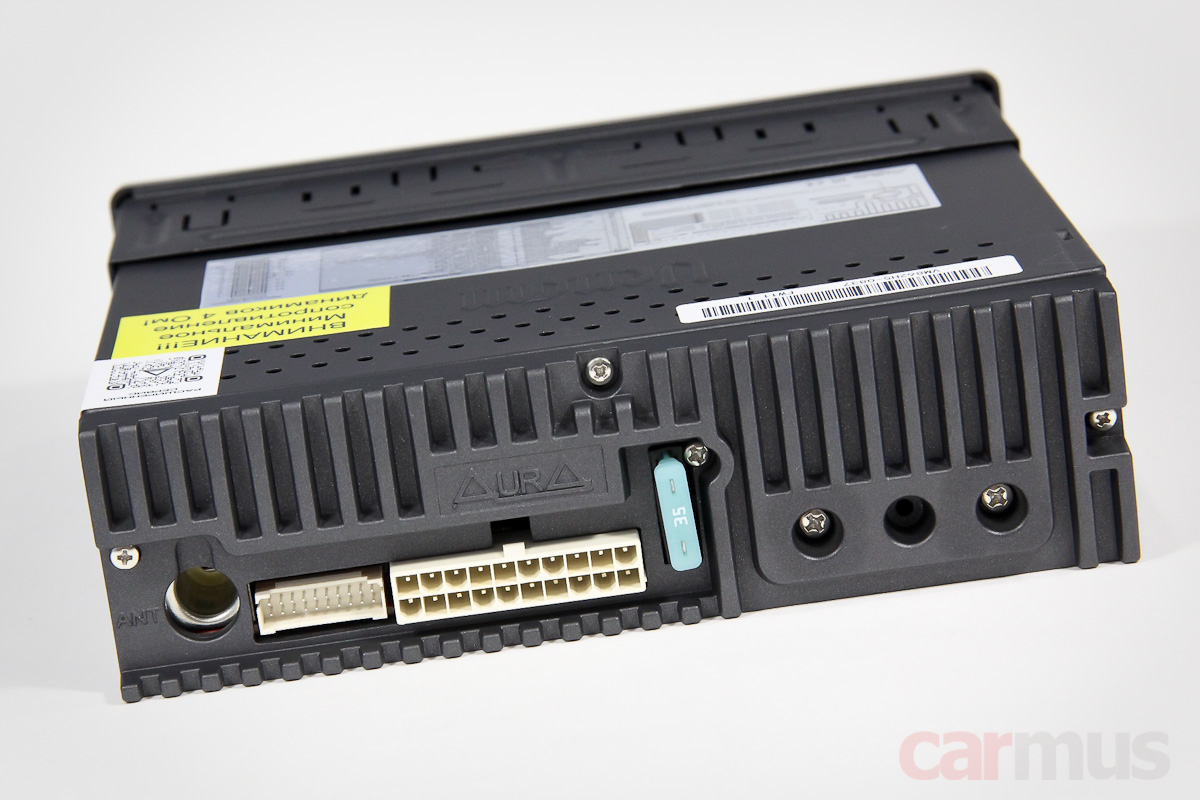
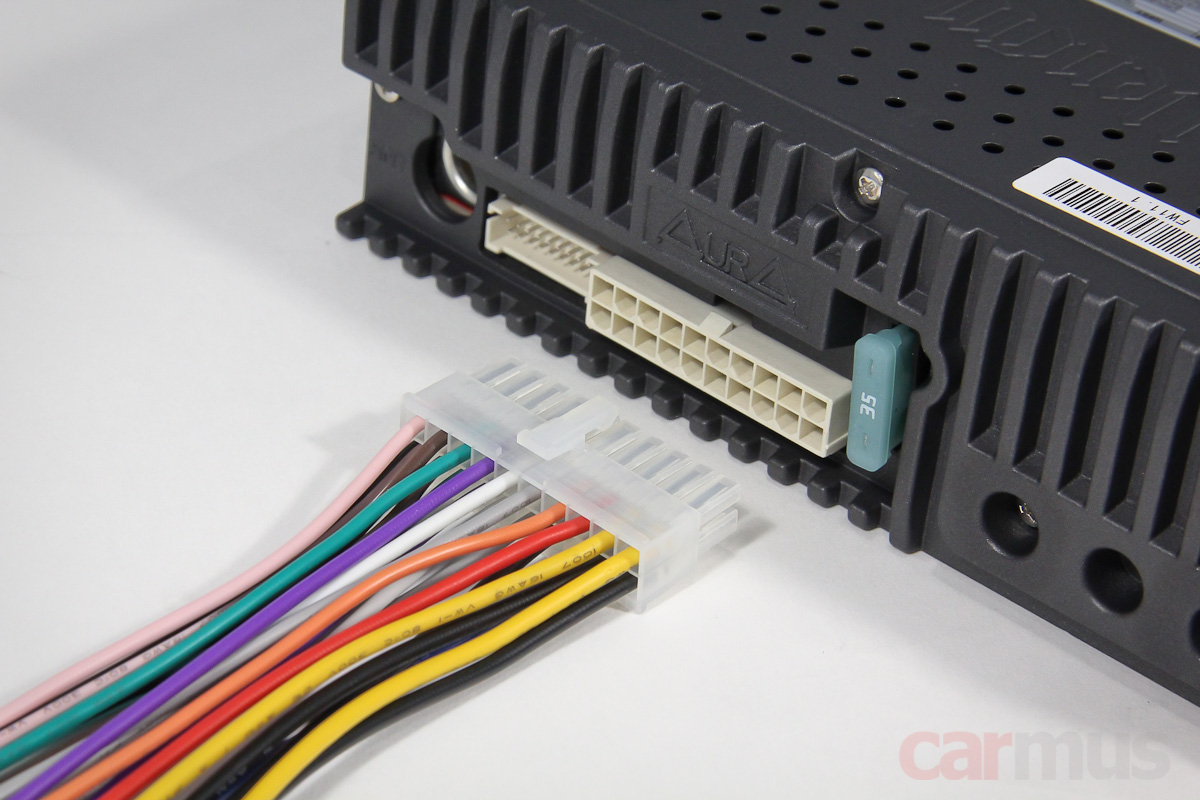
If the head unit has a full-fledged amplifier, connecting it to the factory wiring is out of the question; it's best to run power directly to the battery. For this purpose, the positive terminal in the connector is doubled, and the ground is even connected.
Incidentally, AurA specifically recommends the AurA Venom KIT-1 for these high-power HUs —a pair of 2.5-meter copper cables with all the necessary terminals, a fuse, and crimped ferrules. Convenient.
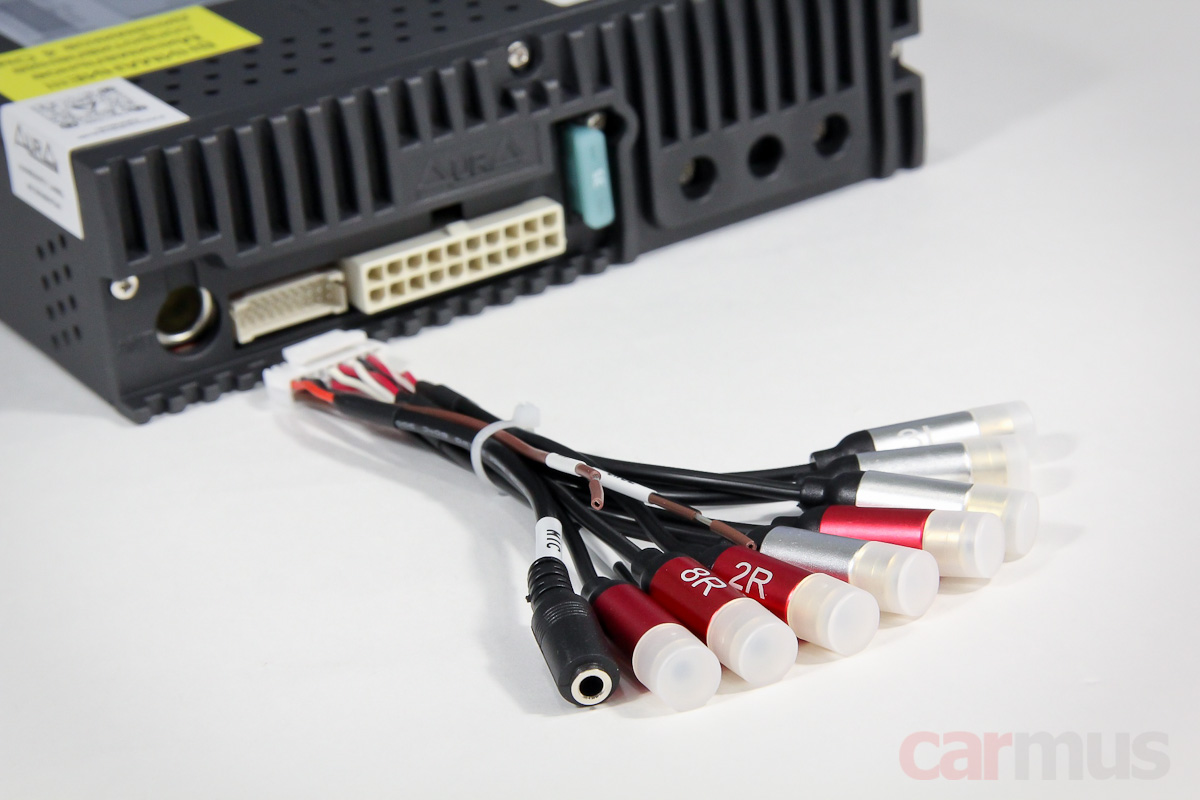
The processor here is 8-channel, with all 8 outputs configured as linear outputs. There's also a jack for an external hands-free microphone and outputs for connecting the head unit to the factory resistive steering wheel buttons.
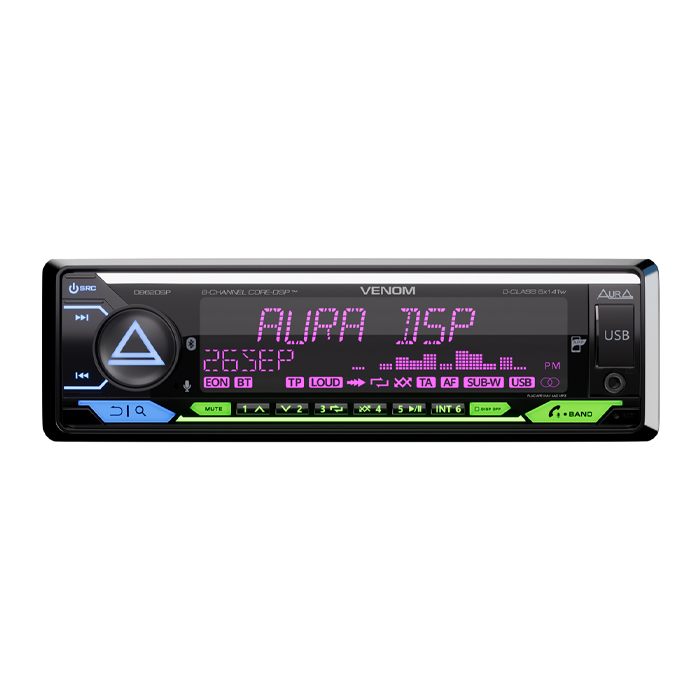
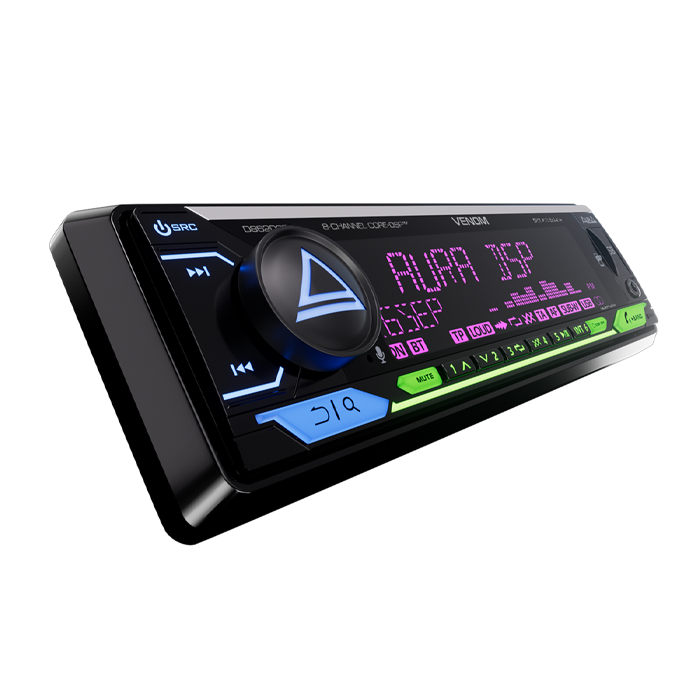
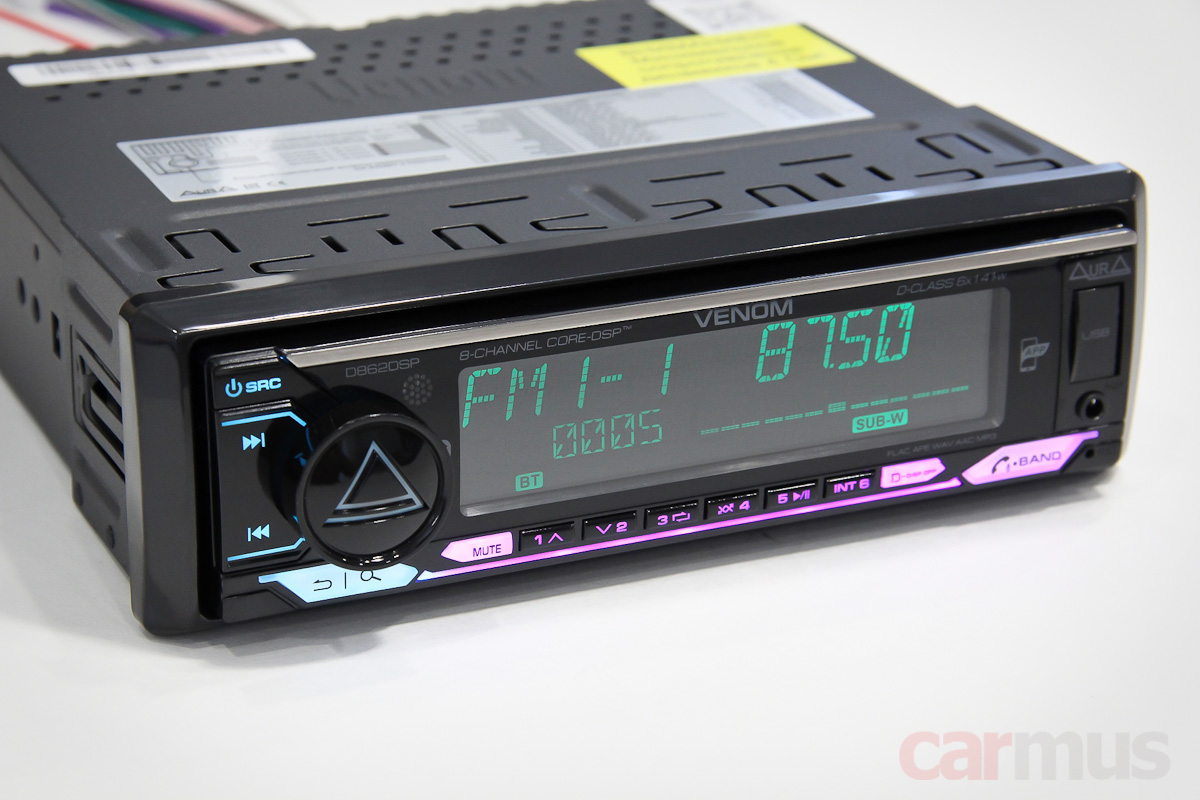
I think it would be unnecessary to dwell on the design, but I'll still mention the large screen. Yes, it's still largely character-based, as it always is in budget devices, but its size ensures good readability, and that's far from the least important thing in a car.
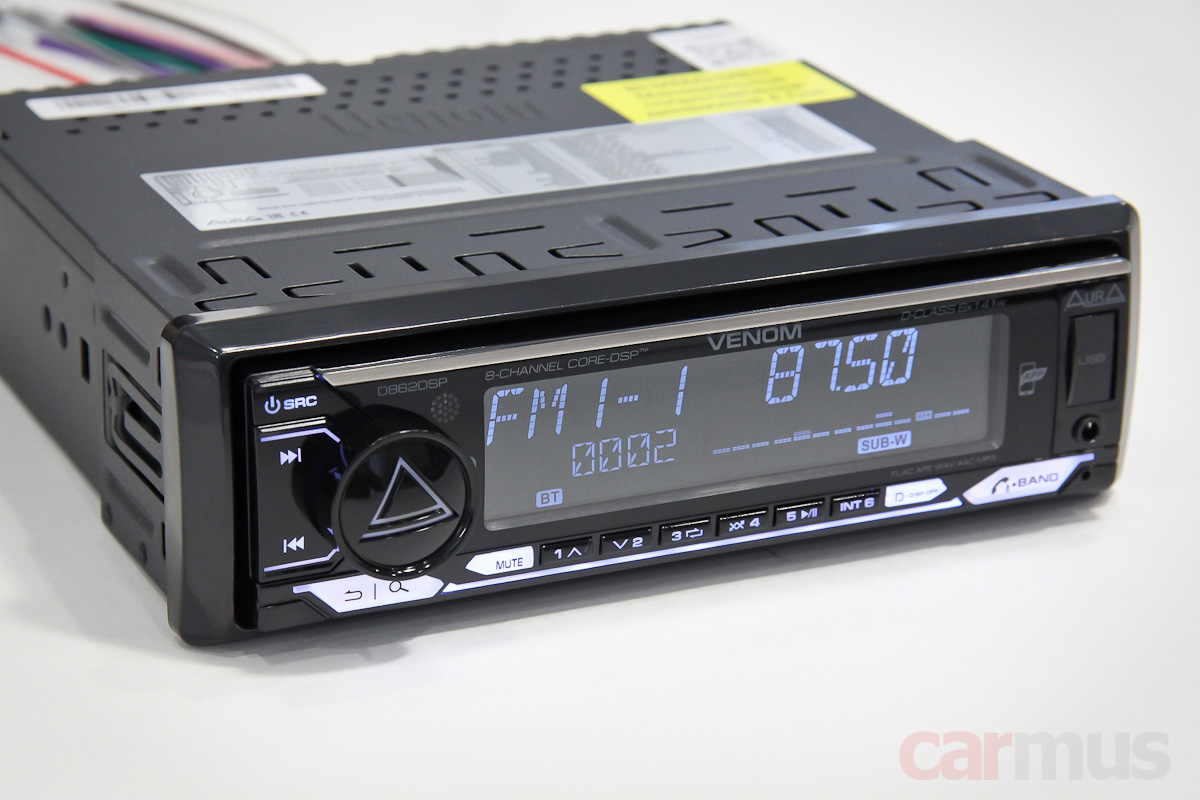
Aura's signature feature is the volume encoder with the logo. It's also backlit, but a little more subdued than the buttons.
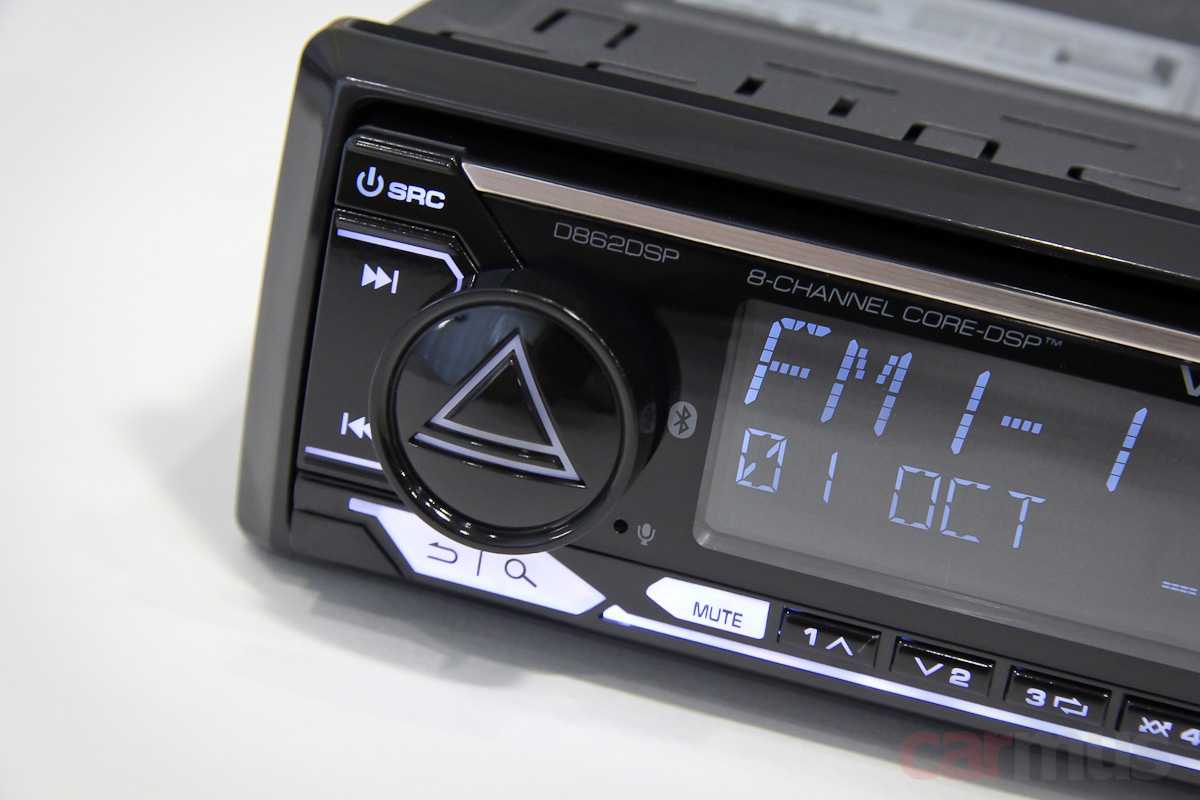
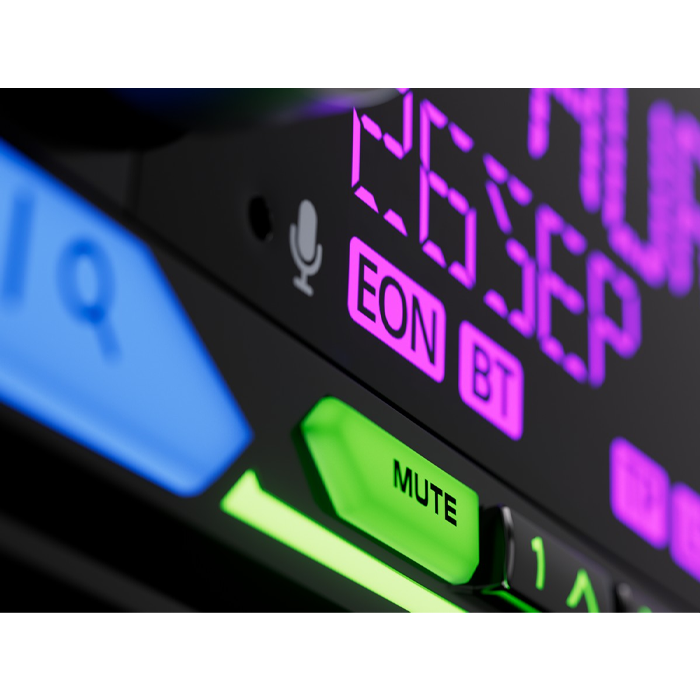
The panel backlight can be customized; it has three zones: the screen, the left part of the panel, and the bottom row of buttons.
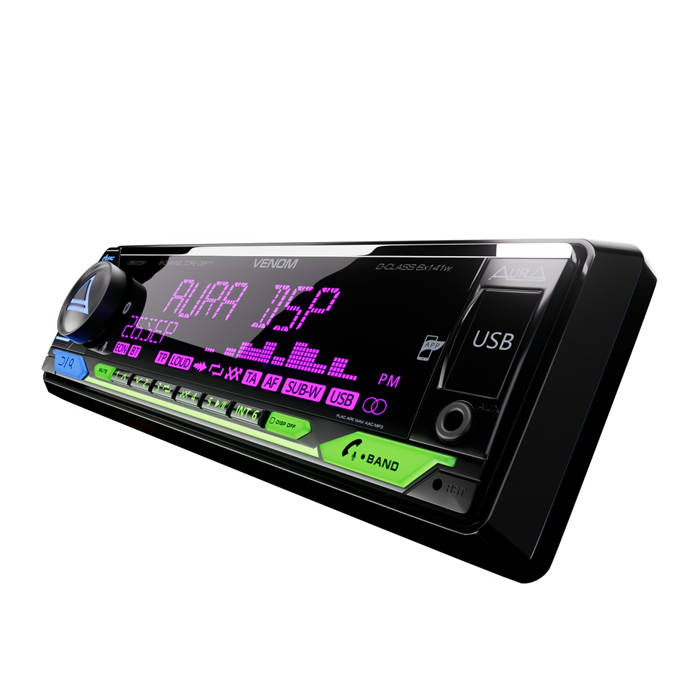
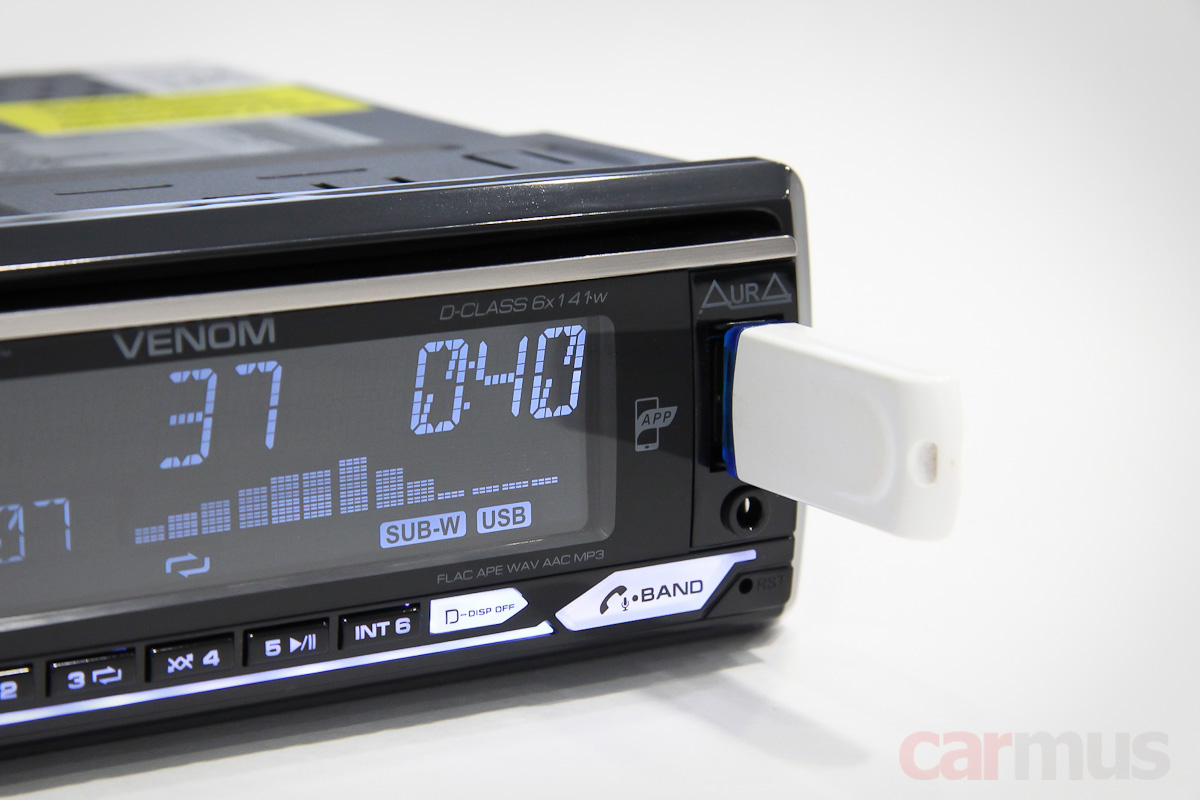
There is only one USB port here and, as usual, it is covered with a sliding cover.
What's inside
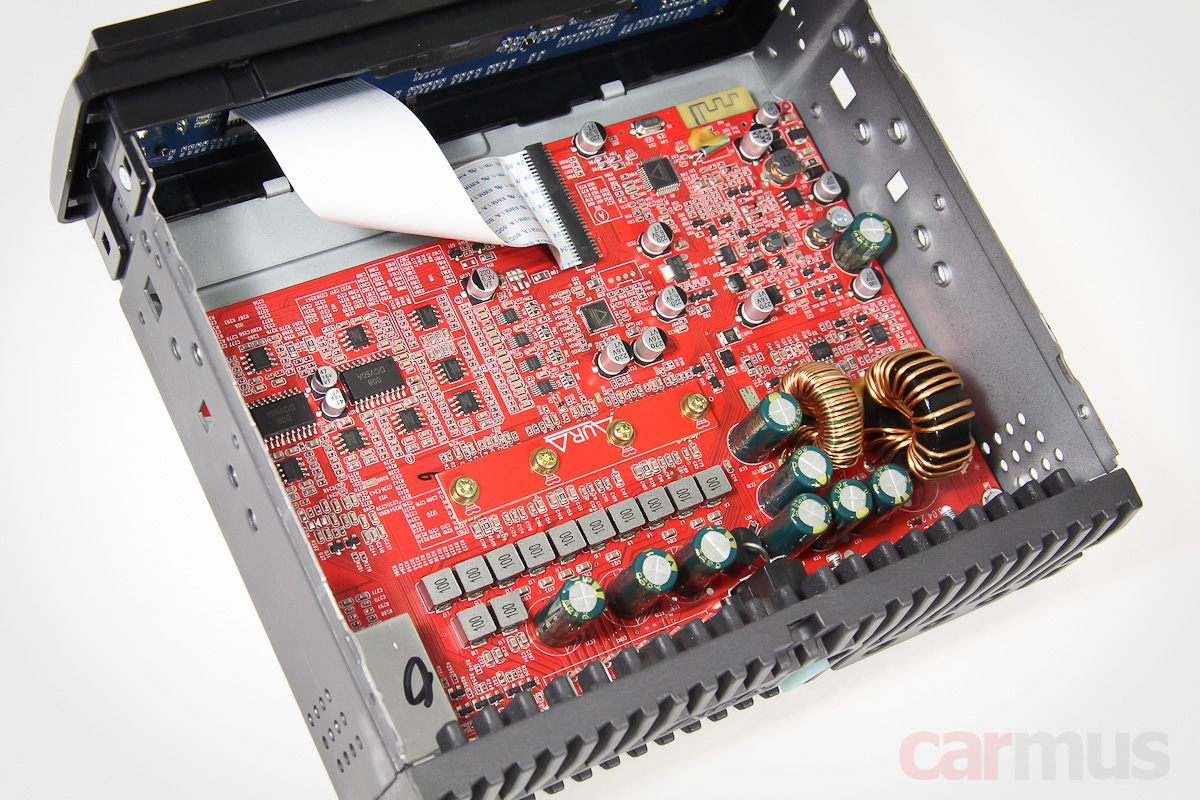
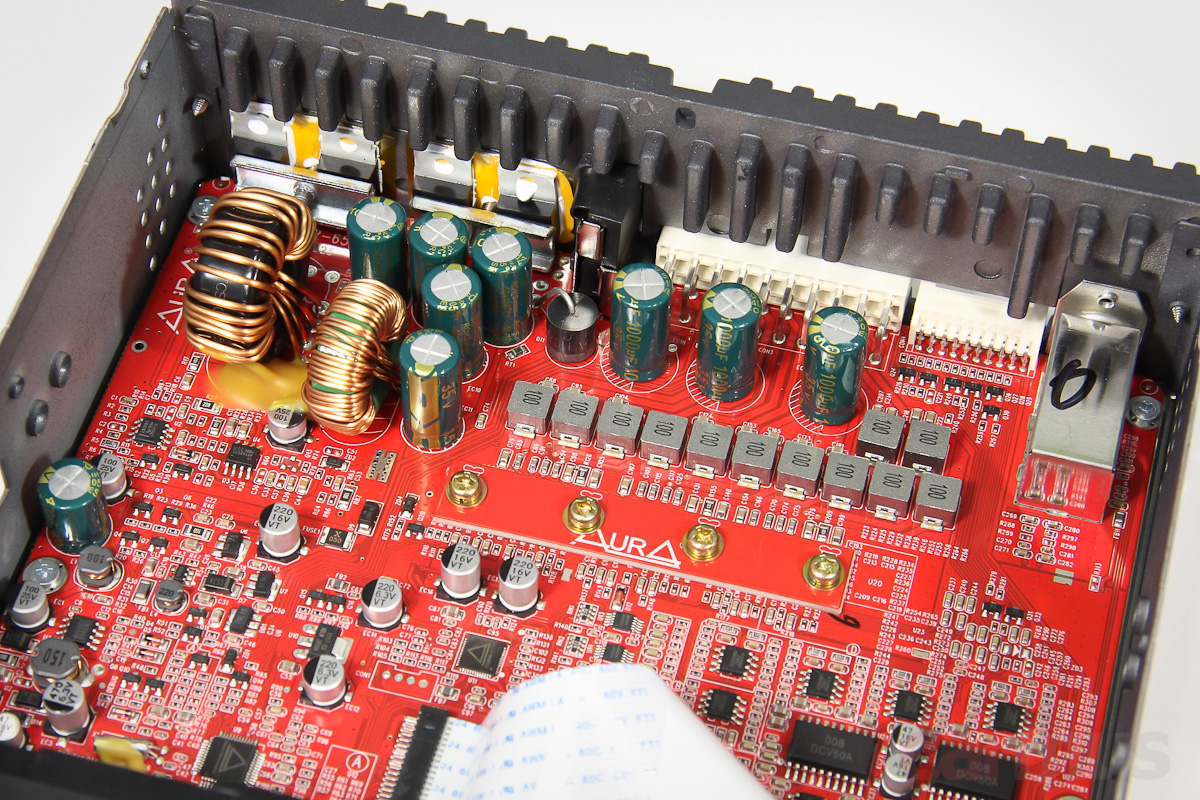
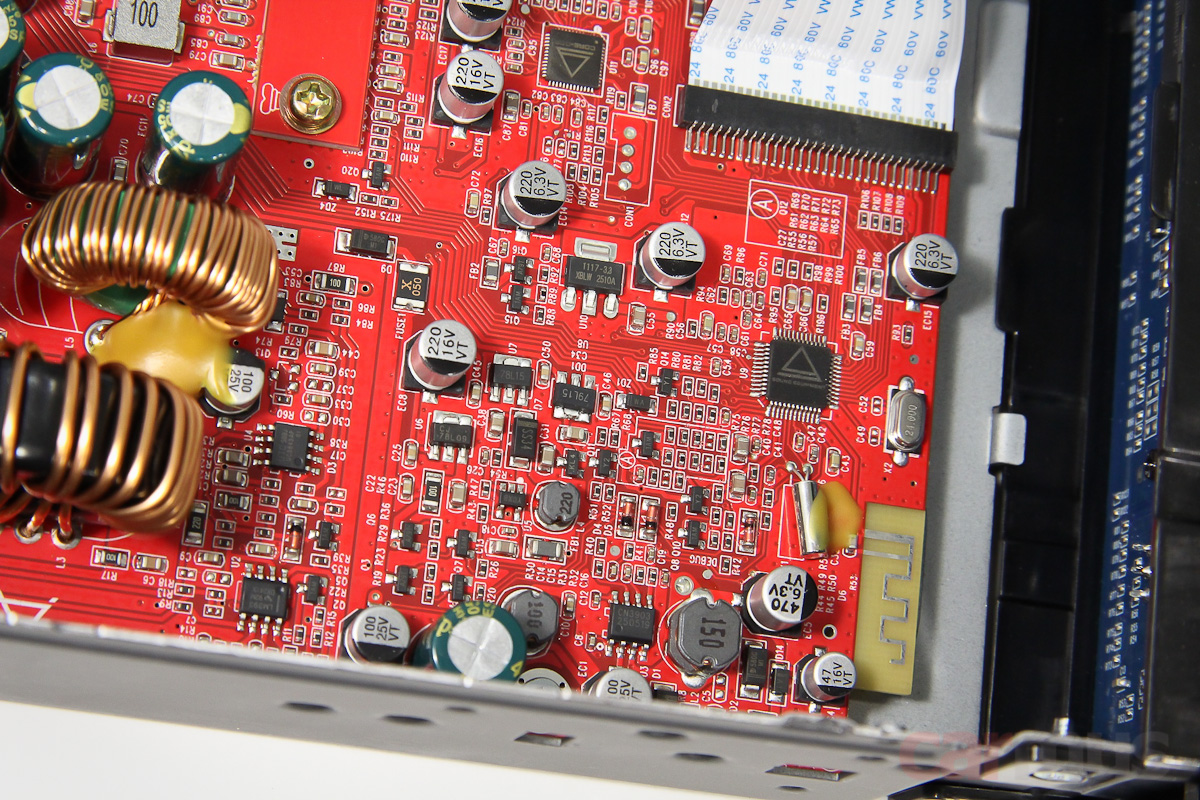
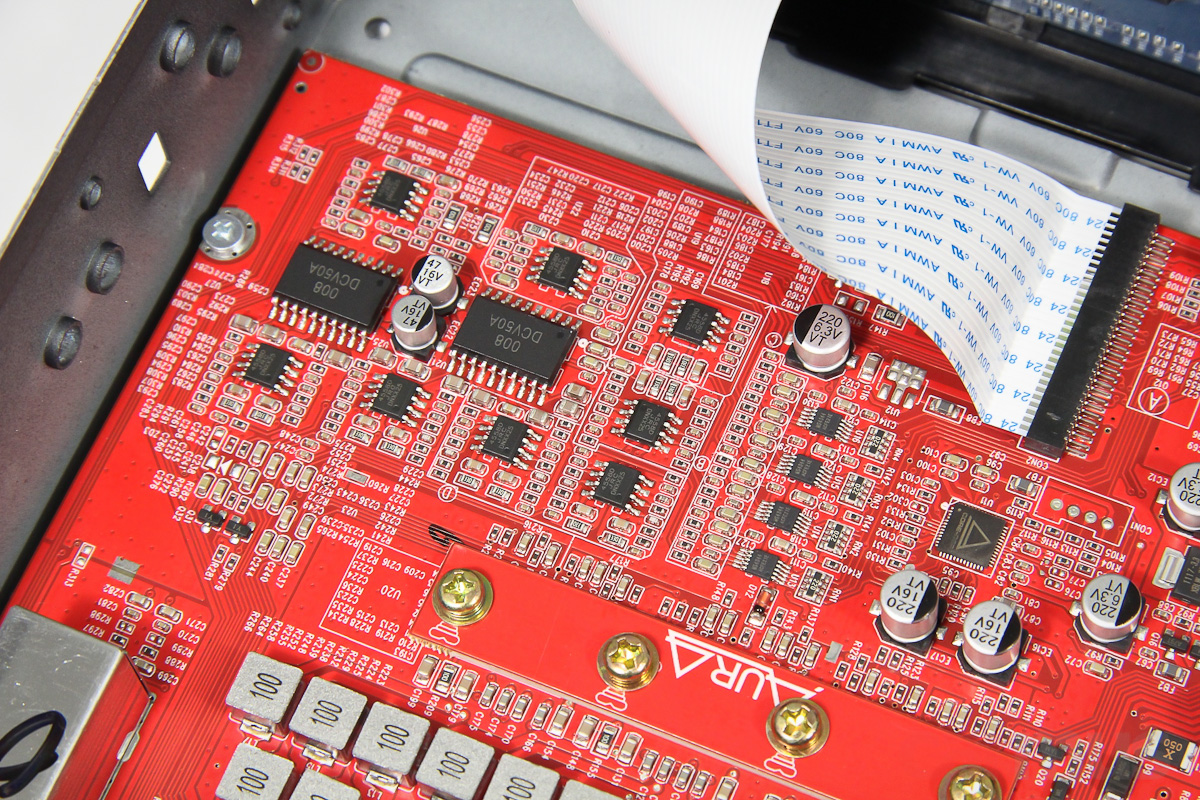
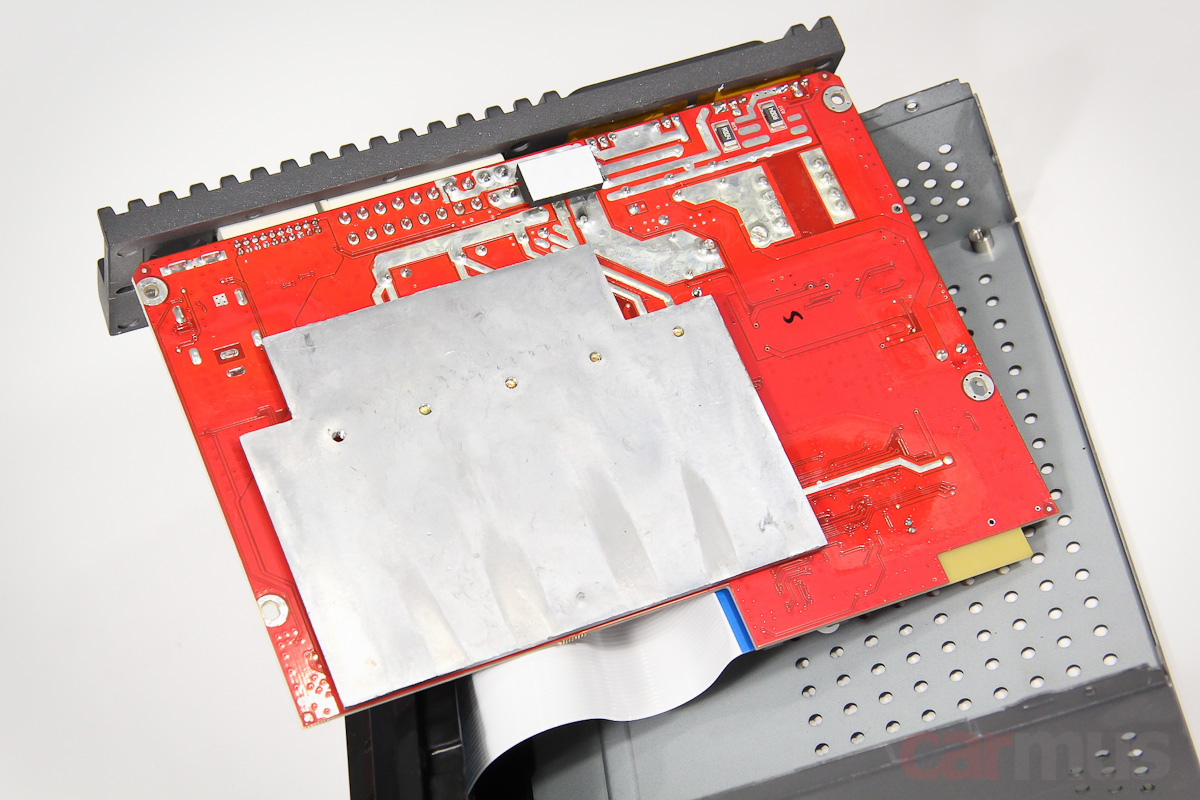
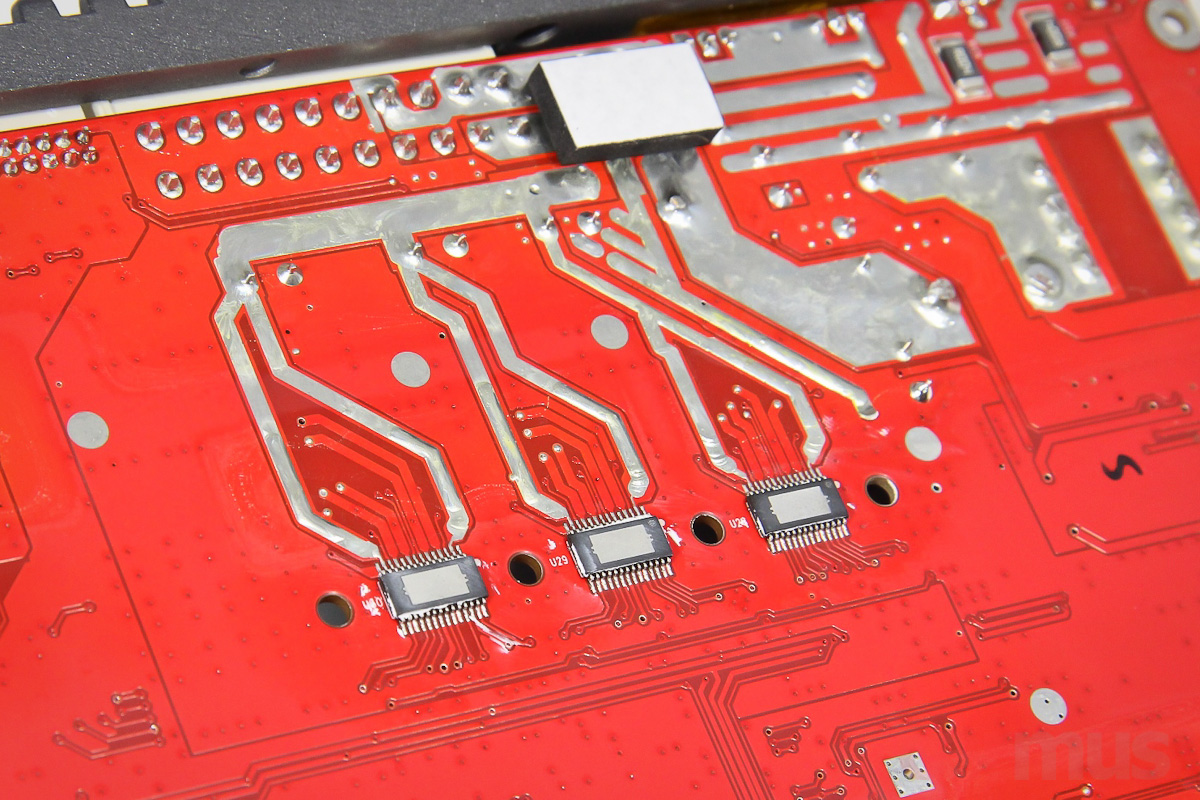
The main feature of the Venom-D862DSP, noted at the outset, is its step-up power supply, which powers the amplifier section. Accordingly, instead of the usual Class AB chip, the power switches for its switching section are mounted on the rear heatsink panel. The Class D power chips themselves are located on the underside of the board and dissipate heat onto a flat aluminum plate. The processor chip bears the AurA branding.
What can it do?
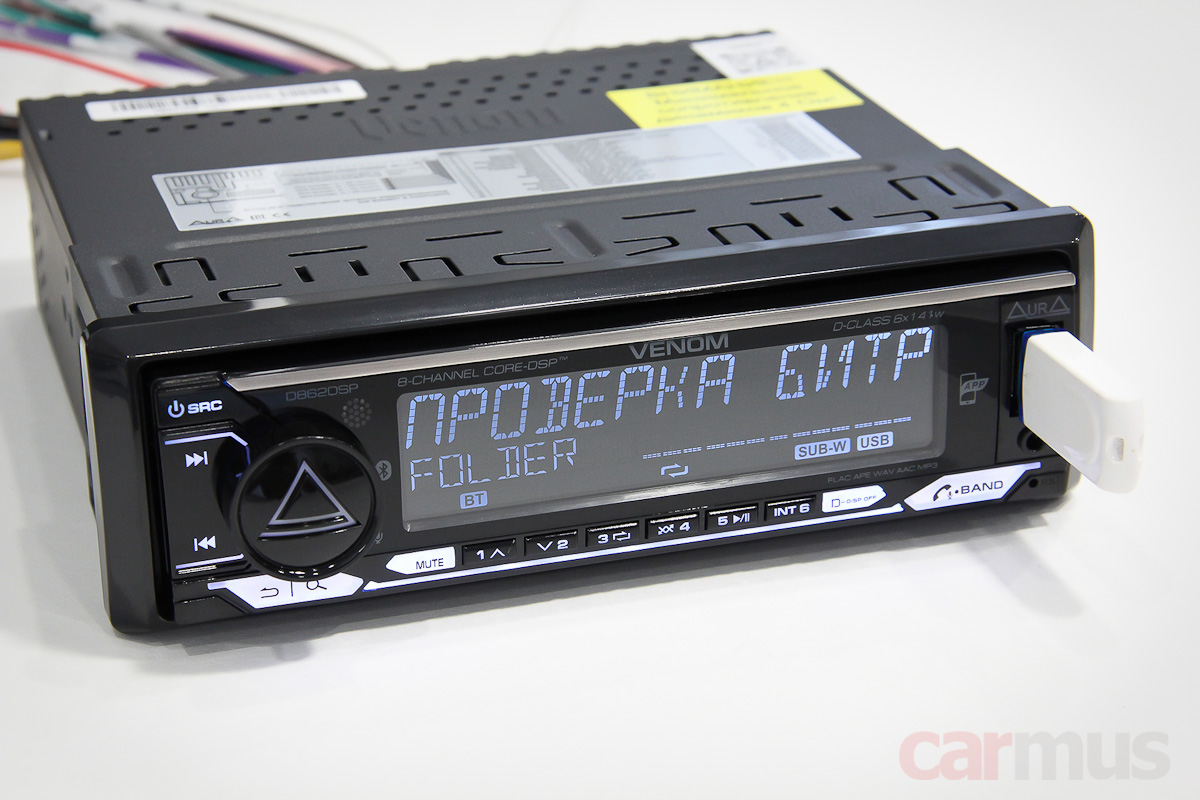
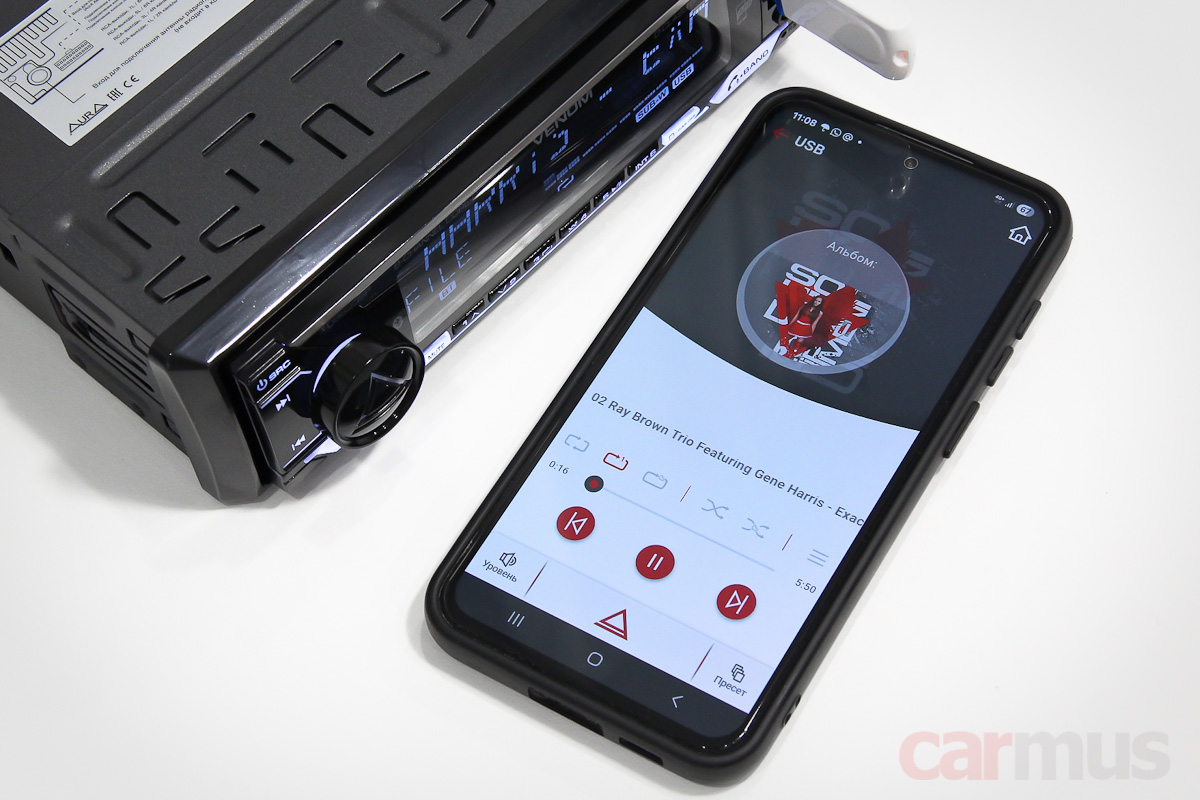
USB playback . The device supports FAT32-formatted flash drives. My 128GB test drive read without any issues, but the device is advertised to support up to 256GB.
All the most popular basic formats were read without issue – WAV, AAC, and FLAC with resolutions up to 24-bit/48 kHz. And of course, MP3 – of course. There were no particular issues displaying file names with Cyrillic characters on the screen.
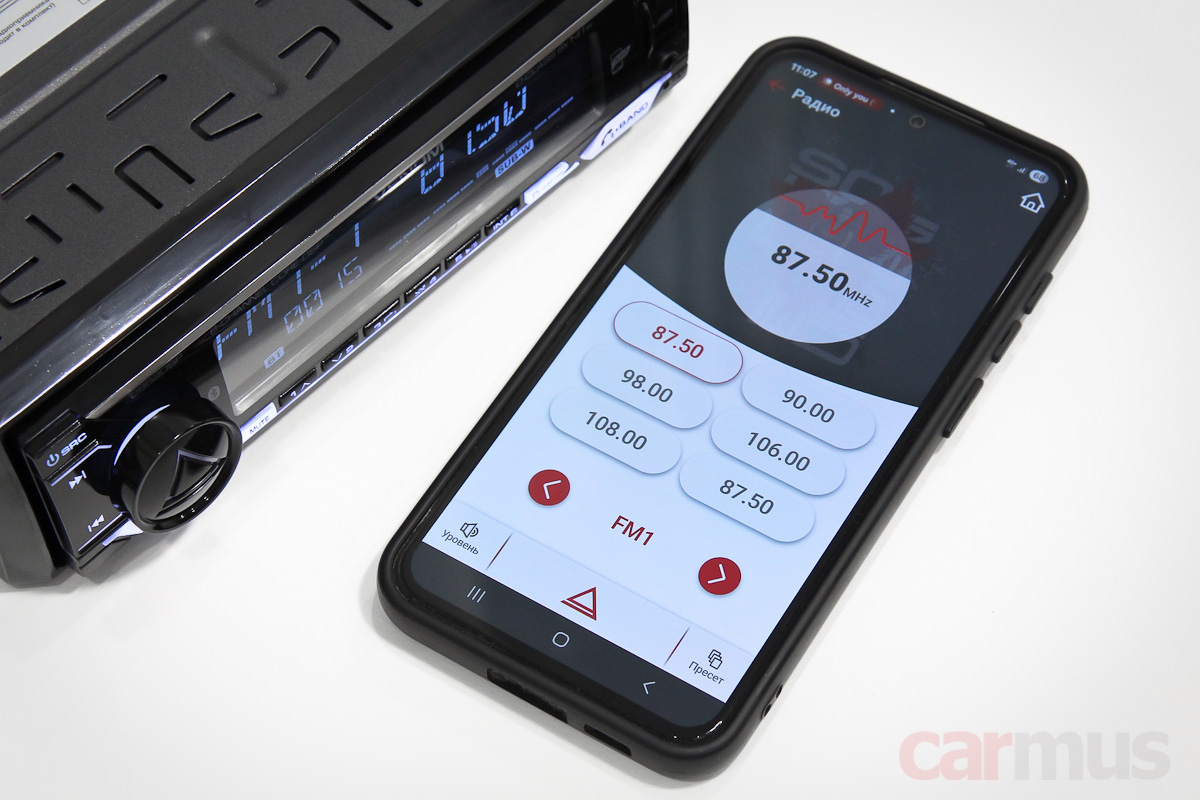
Radio tuner . In addition to the usual FM range (87.5-108 MHz), there's also the so-called "lower" FM band—65-74 MHz. I'm not sure it's all that relevant these days, but so be it. Reception quality is decent; the main thing is to find a decent antenna.
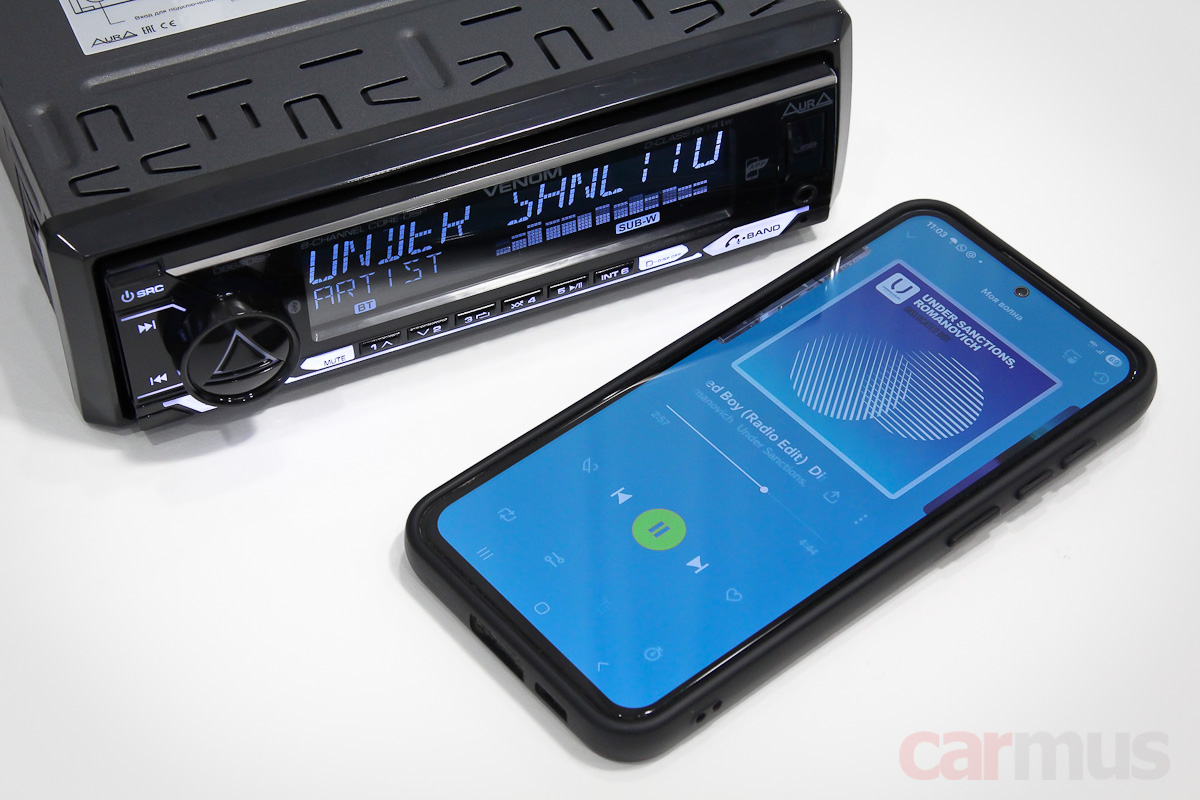
Bluetooth Audio . Track titles and artist names from your smartphone are transmitted to the head unit and displayed on the screen. Bluetooth audio transmission uses SBC basic encoding.
What and how to configure
A new AurA LAB app was recently released for the Core DSP processor platform – it's available on both Google Play and the Apple App Store. All links and QR codes are available on the box, in the manual, and on the brand's official website.
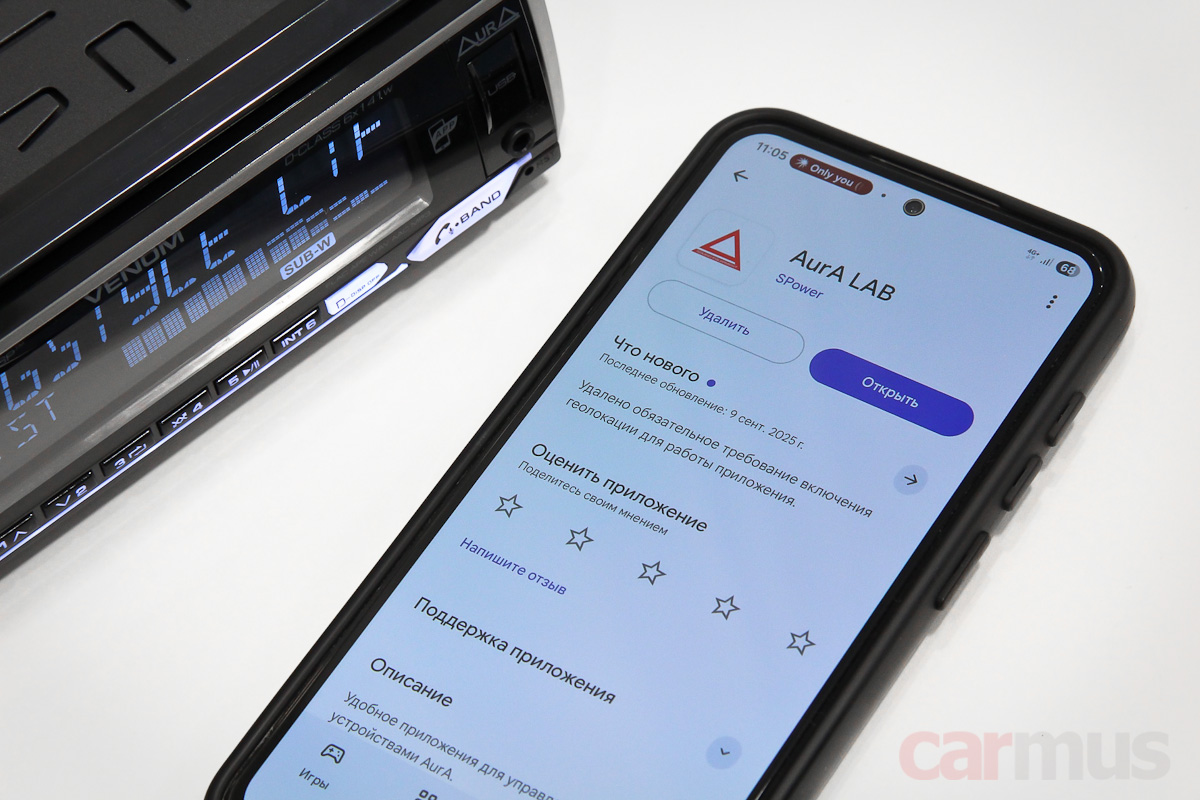
I logged in and installed it. The app connected to the head unit without any issues (let's be honest, this doesn't happen with all headsets the first time). And during testing, it connected immediately without any fuss (at least with my Samsung S23 running Android 16, everything worked perfectly).
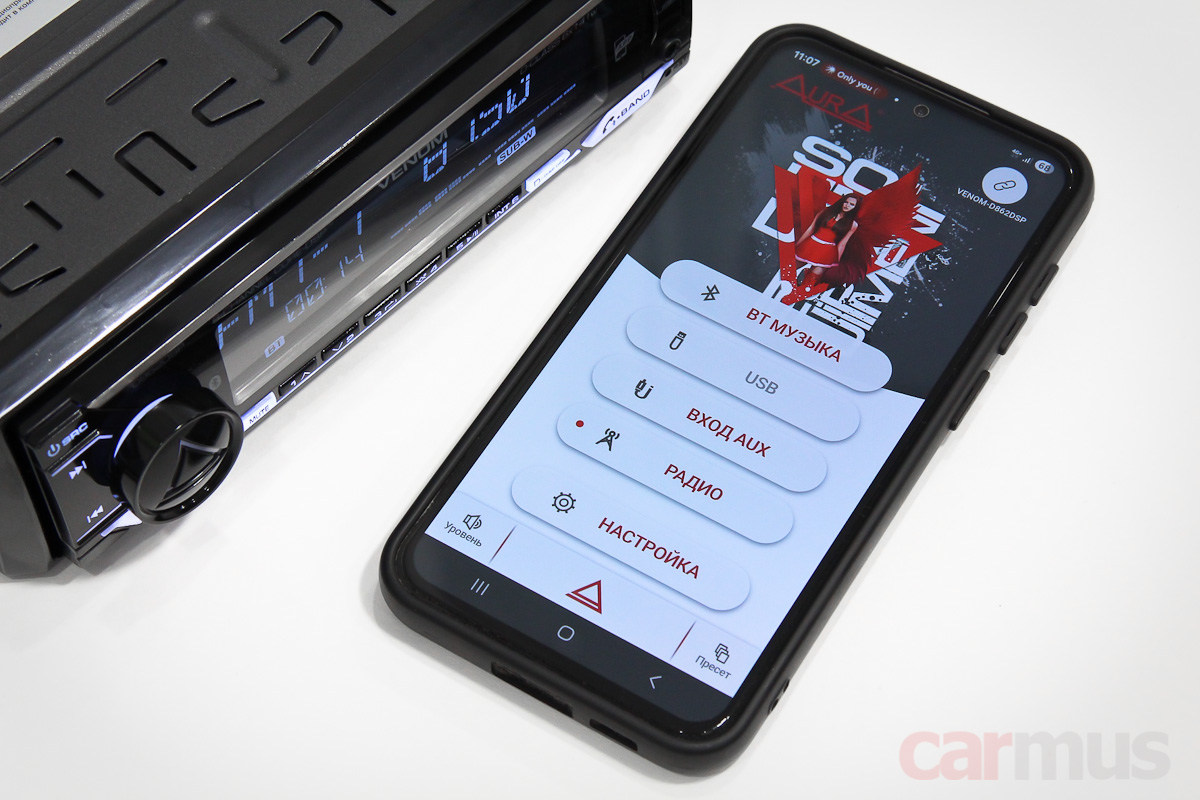
The main screen allows you to select a source, quickly control the volume and subwoofer level (processor channels 7/8), and select presets. Incidentally, the Core DSP platform can store up to six preset configurations in the head unit's memory.
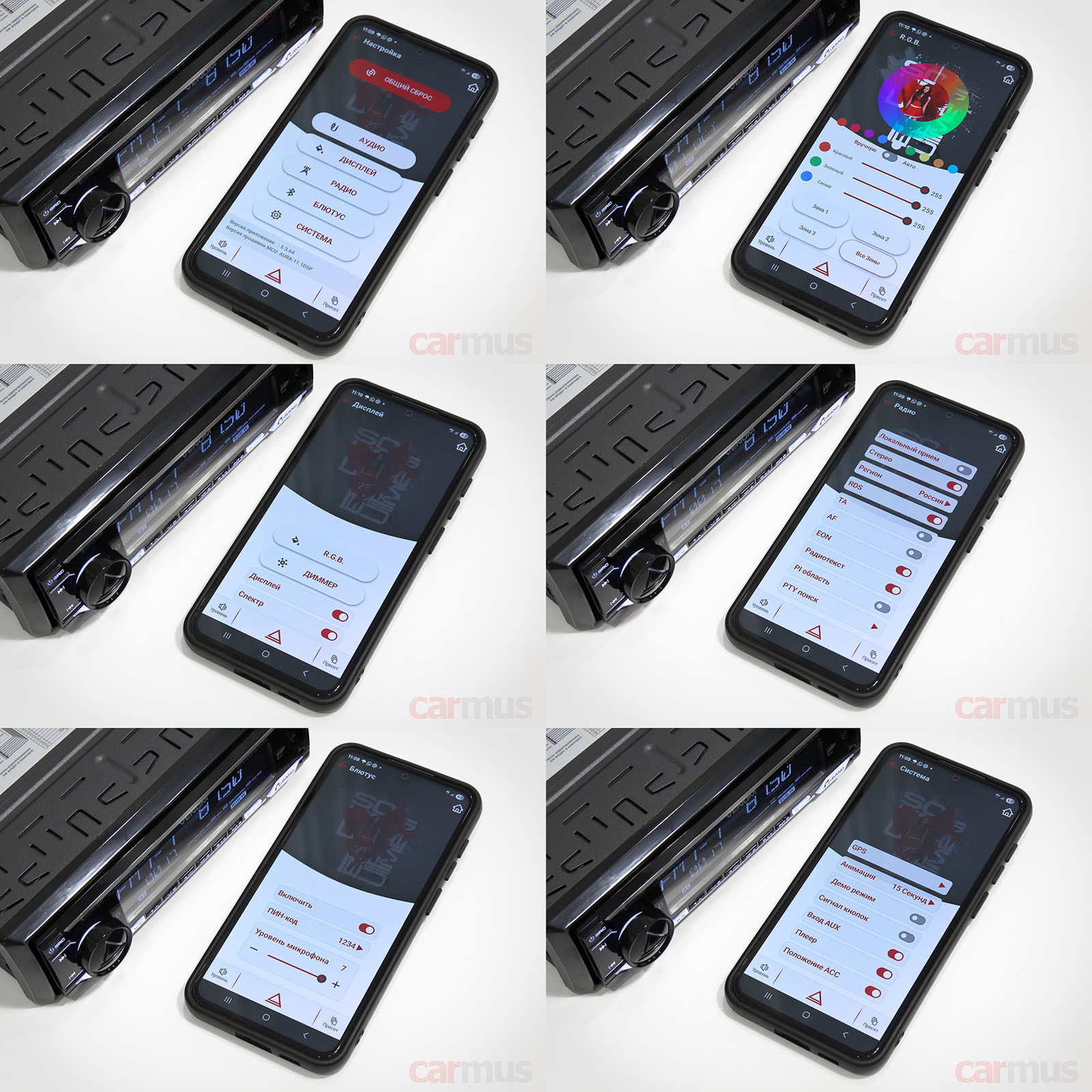
Well, here you can find all the device settings, from the backlight colors to the microphone sensitivity when using Hands Free.
Audio processor settings
Let me remind you that the processor in the Venom-D862DSP model is 8-channel, of which the first three pairs of channels go to the built-in 6-channel amplifier, and the last pair (channels 7/8) are output only in linear form for connecting an external subwoofer amplifier.
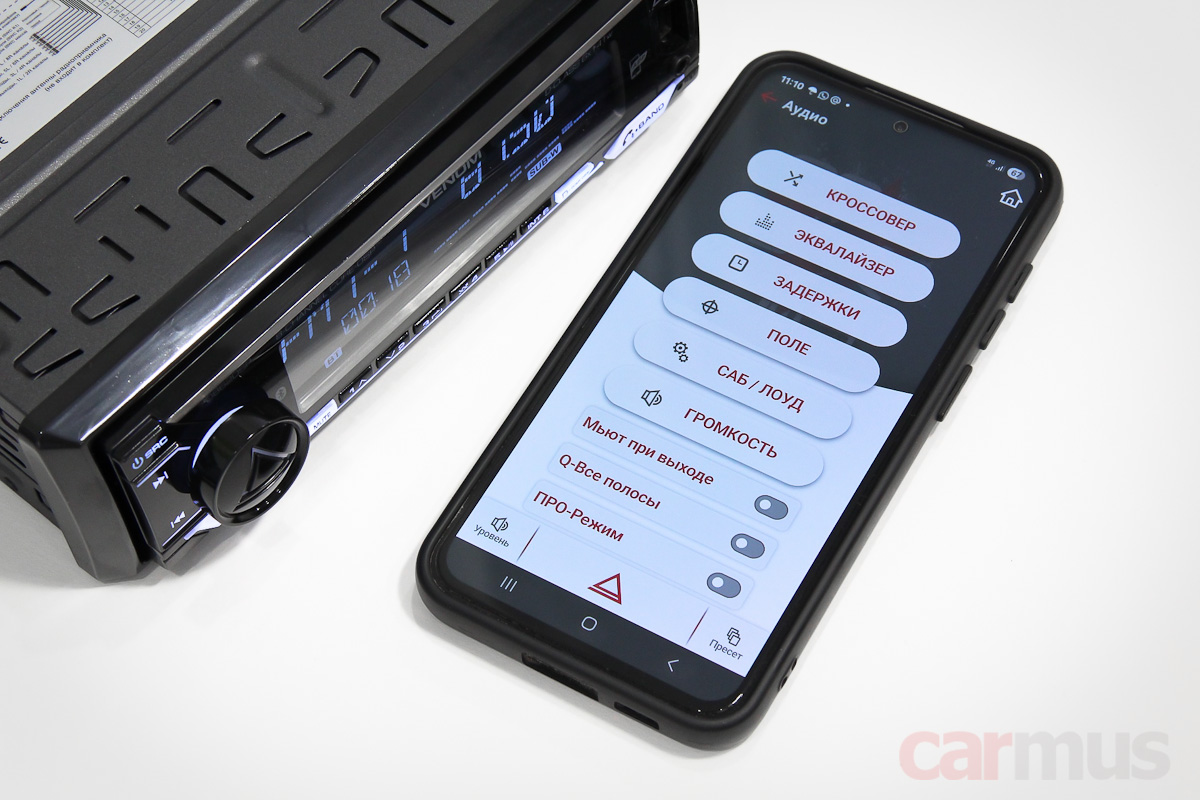
Crossover filters are configured in pairs, but it is possible to set not only the cutoff frequency, but also the type of each filter (Butterworth, Linkwitz, Bessel).
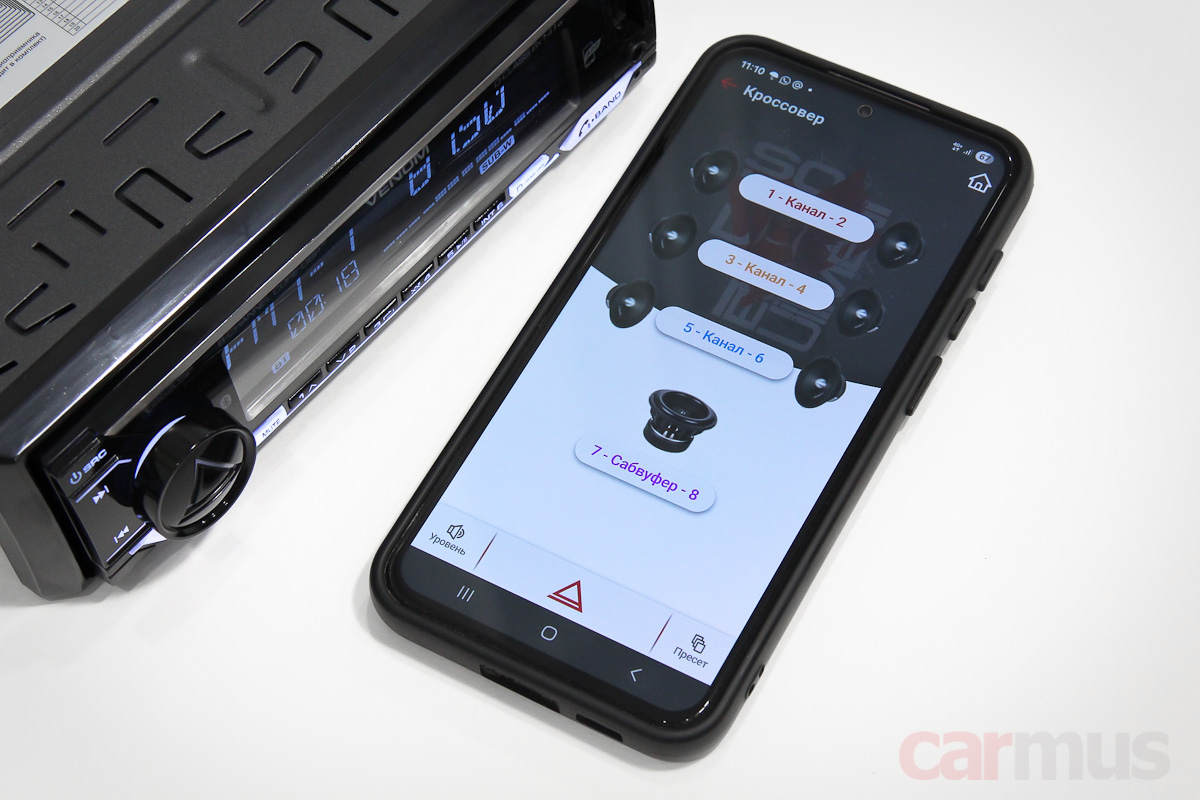
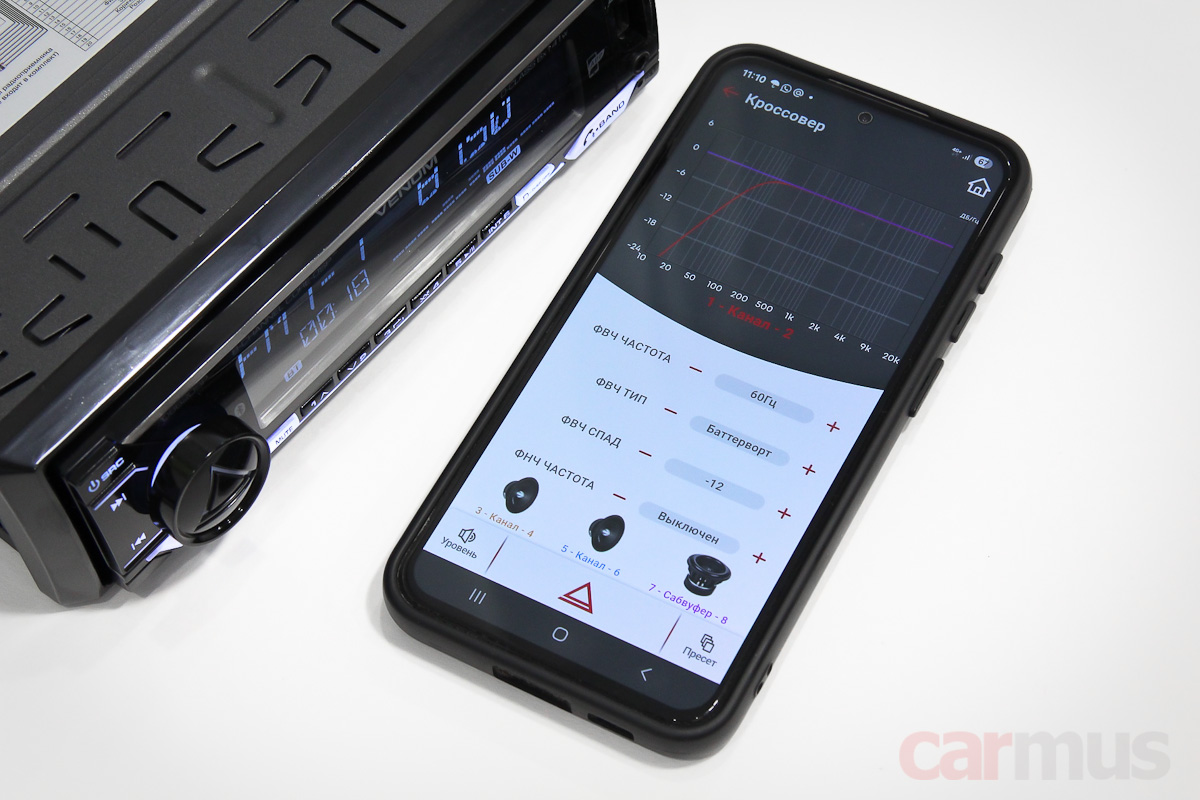
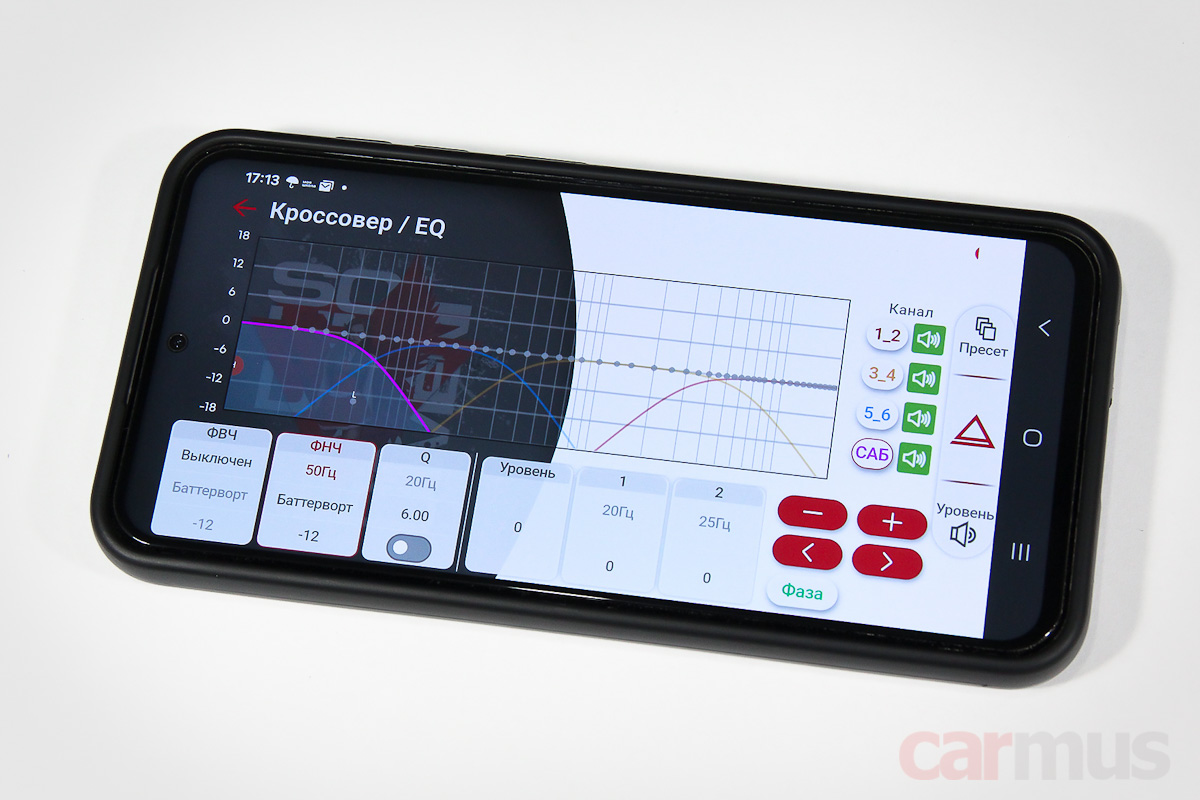
For channels 1-6, you can set any low-pass and high-pass filter cutoff frequencies from 20 to 12.5 kHz and a slope of up to 48 dB/octave.
For channels 7/8, the signal can be cut at the bottom (frequency selected from 10 to 100 Hz) and at the top (from 30 to 800 Hz). The slope is also up to 48 dB/octave.
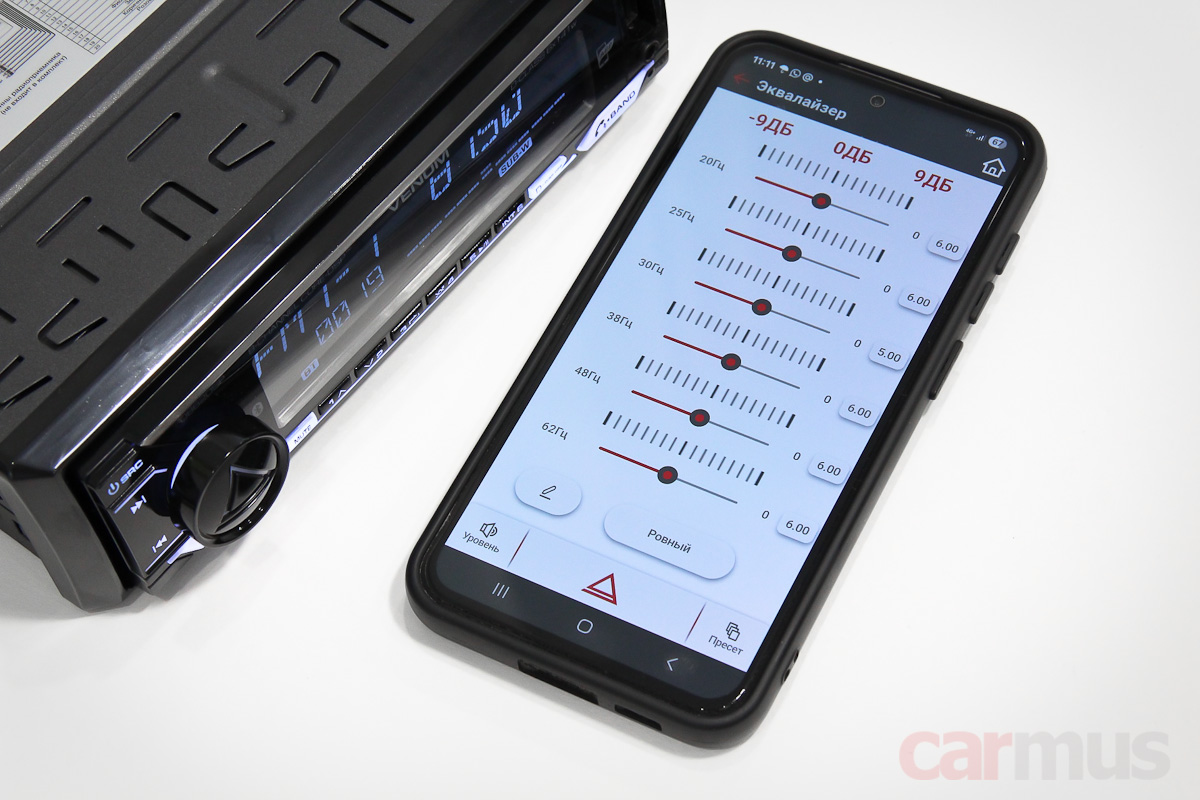
The equalizer , as before, is shared across all channels. It's a whopping 48-band, though, with the ability to adjust the Q factor (bandwidth) for each band individually. It's a bit excessive, in my opinion, but the fact that it's there is probably supposed to convey a sense of cool.
By the way, a feature that remained from the previous version of the app is the so-called PRO mode, which combines the filters and equalizer in a single horizontal window. You can drag the filter cutoff frequencies directly on the graph, and overall, I find it a bit more visually appealing. But that's a matter of taste, of course.
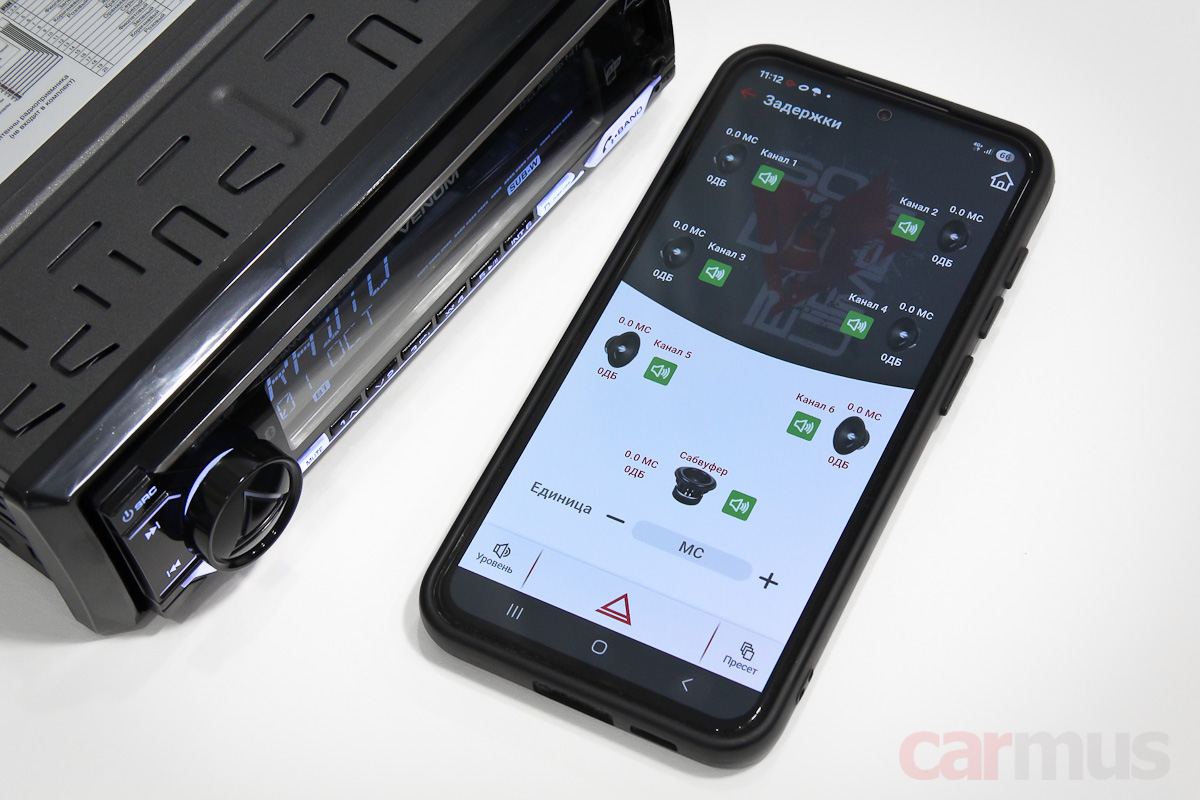
Delays can be set up to 25 ms (equivalent to moving the speaker approximately 8.5 meters away) in 0.1 ms increments (approximately 3 cm).
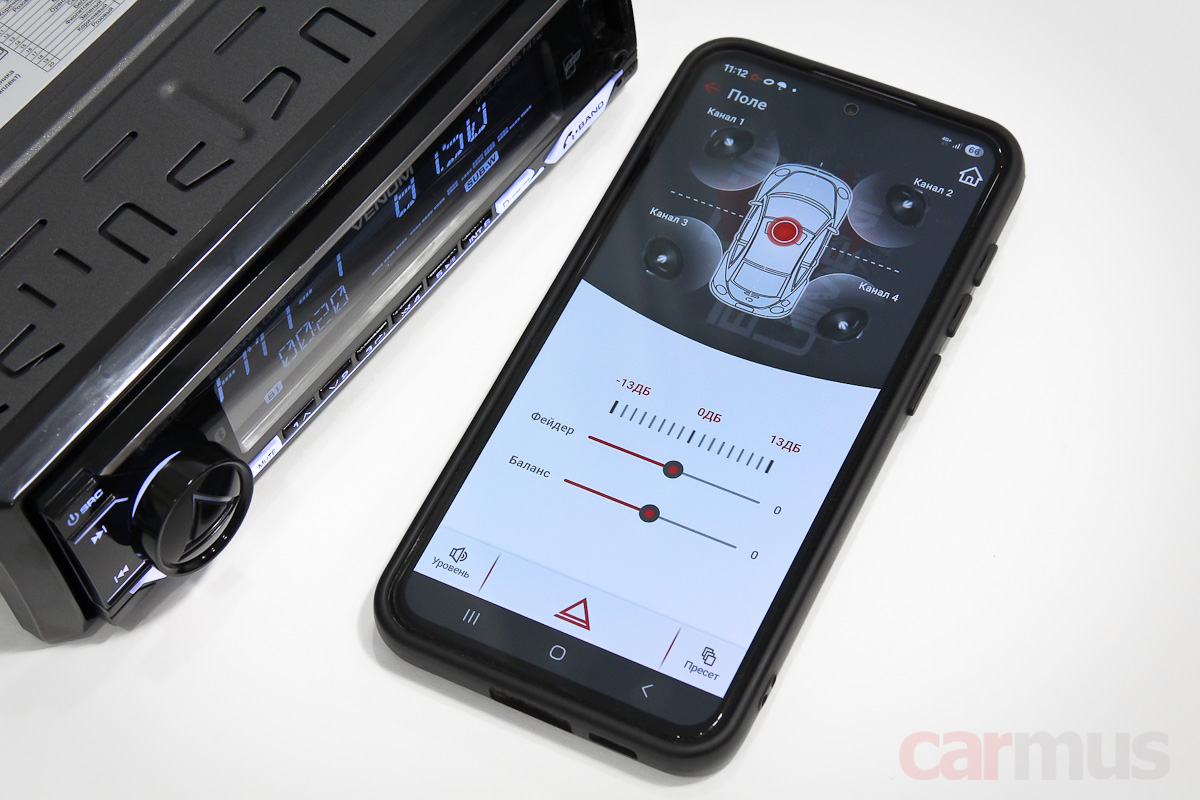
Additional settings . The balance and fader work on channel pairs 1/2 and 3/4 – more relevant for simple systems without channel splits and such.
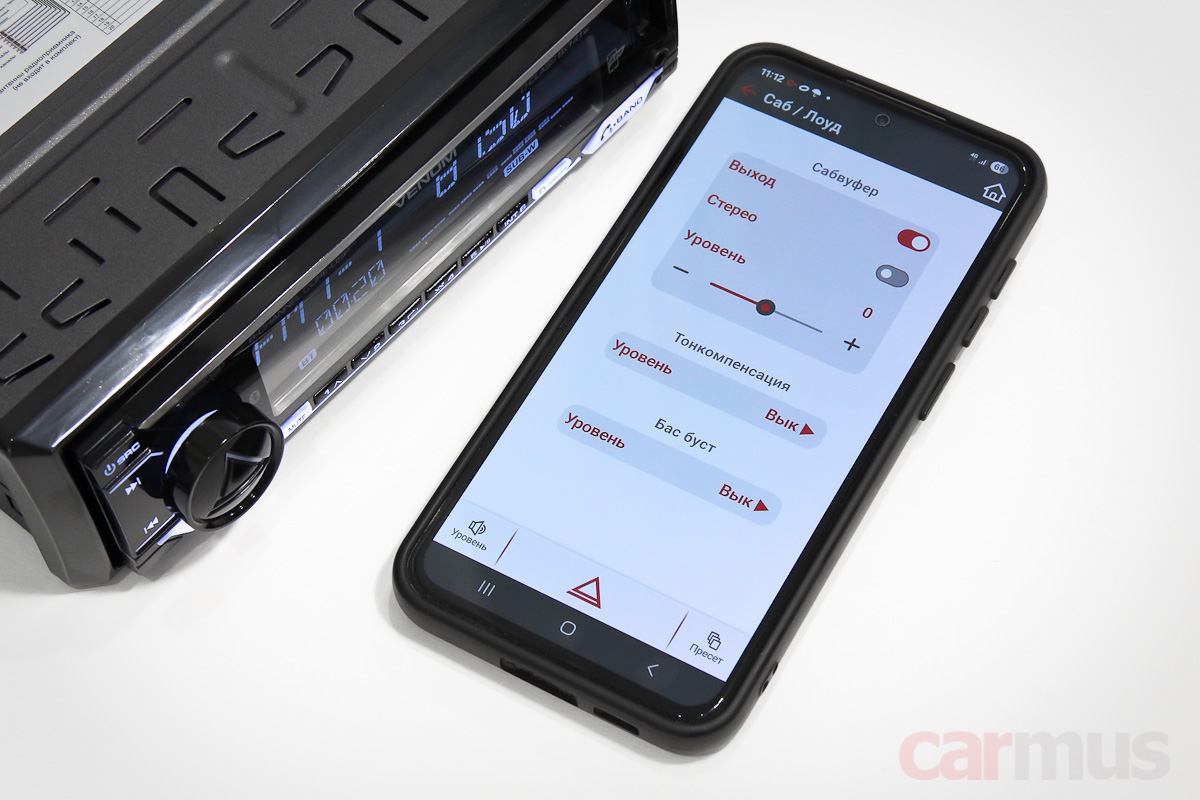
Plus there is loudness compensation and bass boost – also relatively familiar features.
There's no need to monitor the processor itself. As a reminder, the same Core DSP platform is used in the AurA Indigo-877DSP mentioned at the very beginning , and I've already thoroughly disassembled that model. So, I'll move on to examining the amplifier section.
Checking the operation of the amplifier section
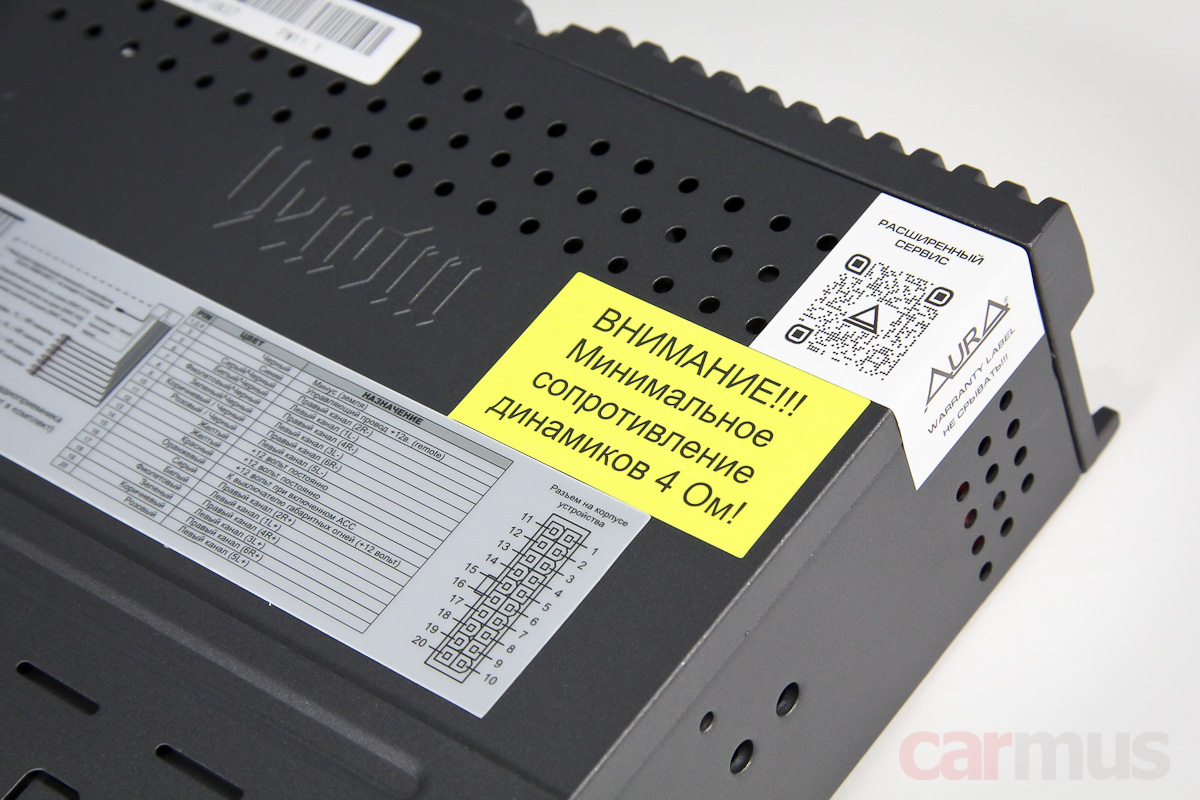
The amplifiers are built using the bridged design, so it's important not to overdo it with reducing the load impedance. There's even a reminder on the case to remind you of this.
I'm loading a file from a flash drive containing a 1 kHz sine wave recorded at 0 dB (the "digital" maximum). At normal signal levels, the spectrum, while aggressive, judging by the difference between the fundamental and harmonics, the THD doesn't exceed 0.03-0.04 percent.
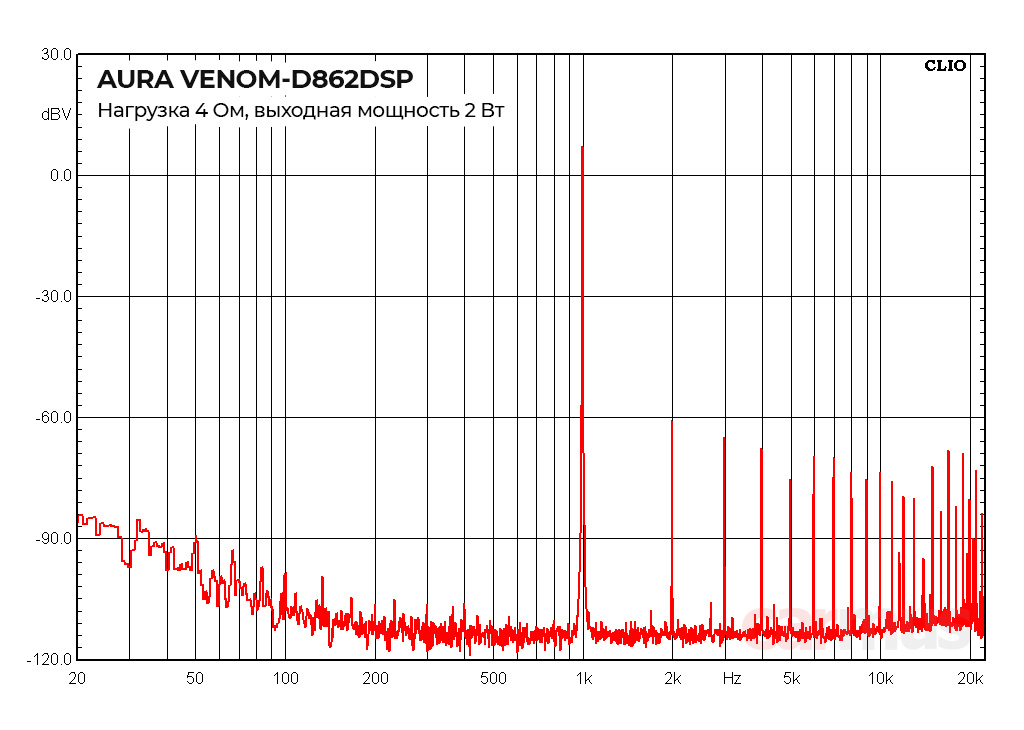
And, by the way, I paid special attention to the noise. A similar issue was once observed in the first batch of similar CPUs, but it was successfully eliminated in the second generation, and in today's tested unit, nothing of the sort was noticed.
On the contrary, note the noise floor on the spectrogram – only at low frequencies does it rise to -90 dBV (i.e., still well below the levels detectable during normal system setup and configuration), and in the information range, it's actually closer to -110 dBV. And this, mind you, isn't at the line outputs, but at the amplifier outputs.
I start turning up the volume. At the maximum value of 62 units, signal clipping hasn't yet set in (all EQ, bass boost, and loudness are at zero). The output signal amplitude is exactly 20 volts.
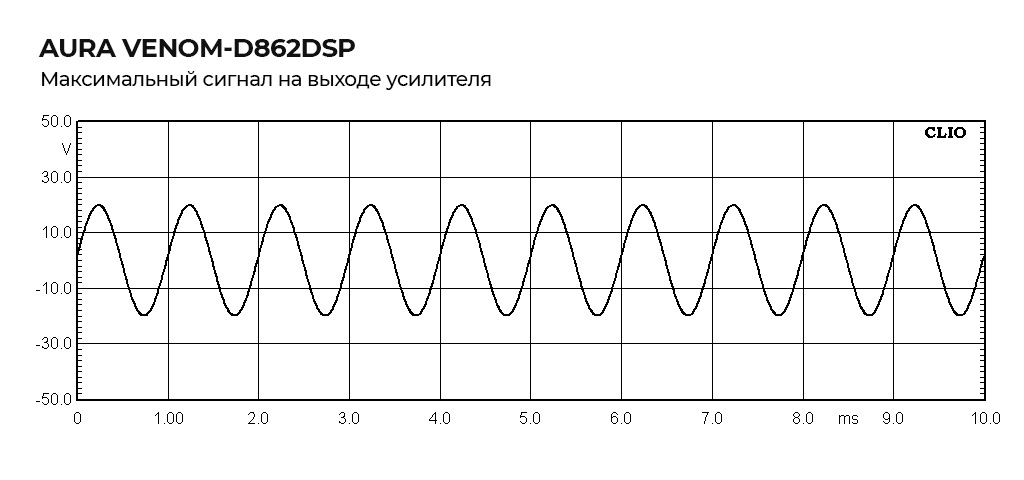
Let's calculate our power output. The RMS value of such a signal is 14.1 volts. Recalling the simple formula, we find that each of the 6 channels delivers almost exactly 50 watts of undistorted (!) power into a 4-ohm load. Not bad at all.
Briefly to the point. What tasks should I choose?
This head unit can truly compete with other processor amplifiers, while having a price that is absolutely ridiculous for its capabilities.
Firstly, there are 6 amplification channels, each of which fully produces 50 watts of undistorted power (namely the nominal, not the maximum or some mythical peak value).
Secondly, the processor allows for a wide range of system configurations. Just one example: a two-way front, rear, and subwoofer system. The front and rear speakers would each be driven by their own amplifier channels, while the subwoofer could be powered by, say, an active subwoofer—the result would be a fully-fledged processor system with significant tuning capabilities, all on a minimal budget.
Yes, one could argue that the capabilities of the integrated processor are technically somewhat lacking compared to those of dedicated processors or "processors." But let's look at why exactly. Can the crossover filters only be adjusted in pairs? Well, that's rarely needed even in more expensive systems. Is the equalizer shared across all channels? True, but how often is separate channel equalization used in budget systems? In fact, the capabilities of this head unit in any case allow for results that more than offset the cost.
- 6 channels of amplification with undistorted power of 50 watts per channel
- 8 channels of processing
- Wide range of crossover filter settings
- The ability to customize absolutely all functions from the application
- There is no external microphone included.
- Output channels cannot be bridged (they are already bridged)
| Weight | 1.49 kg |
| Dimensions | 0.08 x 0.22 x 0.24 m |
| option | 8-CHANNEL DSP |
| standard size | 1 DIN |
| voltage | 12 volts |
| amplifier | D-CLASS |