


Recent Posts
.png)































.jpg)
.jpg)




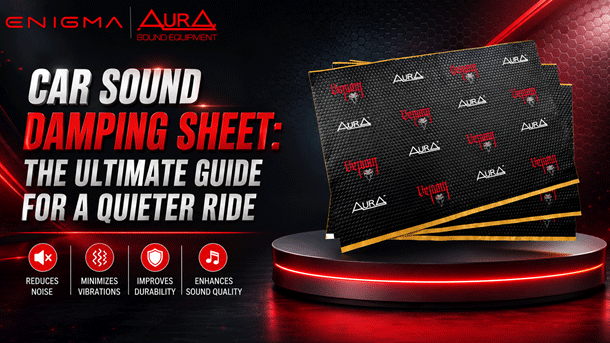
Car Sound Damping Sheet: The Ultimate Guide for a Quieter Ride
What is a sound Damping sheet or car sound deadening?
A sound damping sheet is, at its core, a layer of butyl rubber — usually foil-backed — stuck directly onto bare metal panels inside a car. Doors, floor pan, trunk. Wherever thin sheet metal sits exposed and free to vibrate. That vibration is the actual enemy here, not sound itself exactly. Metal panels flex and resonate every time the tyres hit a seam, and that resonance is what shows up in the cabin as rattle, boom, and that tinny echo people notice on rough roads.
Car sound deadening is really just the umbrella term for the whole process. Some people use it interchangeably with "damping sheet," some treat deadening as the broader category that includes damping, decoupling, and barrier layers together. Doesn't matter much in practice. Most retail products marketed as sound deadening for cars are, functionally, damping sheets doing the same job under a different label.
Why should you care about the Car Damping Sheet?
Because untreated metal panels genuinely change how a car sounds and feels, and most people never connect the dots. That rattle at a specific engine RPM. The door that sounds hollow when it shuts. Road noise that seems to climb faster than it should past 80 km/h. A car damping sheet addresses the actual mechanical cause rather than papering over it with louder speakers or better door seals alone.
I've sat in the same car before and after a proper door treatment, and the difference isn't subtle. Doors close with a denser thud instead of a tinny clang. Bass from the factory speakers sounds tighter too, oddly enough, since the panel isn't buzzing along with the cone anymore.
What materials are used for car door damping sheets?
Butyl rubber dominates this category, and for good reason. It stays pliable across a wide temperature range, bonds well to painted metal, and doesn't turn brittle the way cheaper alternatives do.
- Butyl rubber, foil-backed — the industry standard. Flexible, good adhesion, holds up in heat.
- Asphalt-based sheets — cheaper, but they harden and crack faster, especially somewhere as hot as an Indian car interior in peak summer.
- Closed-cell foam layers — sometimes added on top of butyl for extra decoupling, though foam alone doesn't do the vibration-killing job butyl handles.
For car door damping sheets specifically, thickness and foil quality matter more than most buyers realize. A thin foil layer tears during install, and a torn foil layer loses some of its heat-reflective benefit along with looking sloppy.
Where should you apply sound damping sheet in car?
Doors first. Always doors first. That's where most of the audible rattle and road noise transmission actually originates, and it's also the panel most people notice the difference on immediately after install.
After doors, priority usually goes something like this:
Floor pan — cuts road noise and some heat transfer from underneath.
Trunk — helps if a subwoofer's installed, or just for general cabin quietness.
Roof — the most labor-intensive spot, headliner removal required, usually the last upgrade people bother with.
Firewall — reduces some engine noise bleeding into the cabin, though it's a tighter, trickier install.
Doors alone typically satisfy most people chasing a quieter ride on a budget. Full coverage is for someone chasing something closer to studio-quiet, which is a different, more expensive project entirely.
How to install a Car Damping Sheet in your car?
While installing a car damping sheet you need to first Clean the panel first, properly, not just a quick wipe. Any oil, dust, or old adhesive residue kills the bond. Isopropyl alcohol works well for this.
Cut the sheet to size, leaving a small margin, then peel the backing gradually rather than all at once — helps avoid the sheet folding onto itself and wasting material. Press it down firmly starting from the center, working outward toward the edges, chasing out air bubbles as you go.
Then comes the part almost everyone skips: rolling it. A proper roller, not a fist or a block of wood, applies even pressure across the whole surface and forces out trapped air pockets that would otherwise weaken the bond over time. Rushed installs without proper rolling tend to peel at the edges within months, sometimes sooner in serious heat.
Brand spotlight: Aura sound damping sheet for car
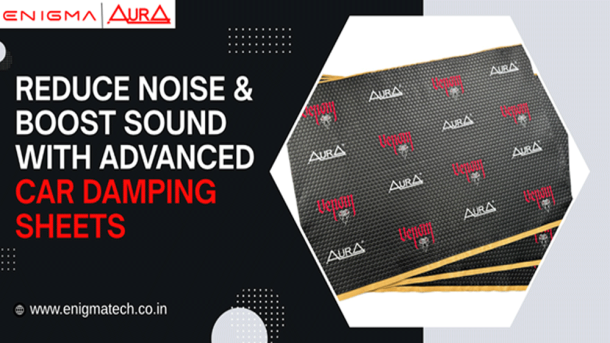
Enigma carries Aura's damping sheet lineup, built around foil-backed butyl construction in standard sheet sizes meant for doors and floor sections specifically. Nothing exotic about the formulation — it's the proven, standard approach done with consistent batch quality, which honestly matters more in this category than flashy marketing claims about proprietary compounds.
For someone doing their first install, Aura's sheets are a reasonable starting point precisely because the material behaves predictably. No surprises in adhesion, no unexpected brittleness after a few months of Delhi summer heat.
Where to buy sound deadening materials/car damping sheet?
To buy a car damping sheet the best place is a car audio and accessory shops which still carry the better-known brands, and that's usually the safer route for a first-timer who wants to actually touch and feel the material before buying. Enigma supplies Aura's lineup directly to retailers, cutting out an extra markup layer compared to buying through a random online reseller with no real accountability if a batch turns out inconsistent.
Online marketplaces work fine too, provided the seller's reputation checks out. Watch for suspiciously cheap listings claiming premium butyl construction — that's usually where the asphalt-based knockoffs hide, dressed up in similar packaging.
Does car sound deadening work? What's the real difference?
Yes, sound deadening works, though it's worth being realistic about what it does and doesn't do. It won't make a car library-silent. Engine noise still gets through to some degree; wind noise at highway speed doesn't disappear entirely. What changes noticeably is the rattle, the tinny resonance, and a fair chunk of road noise transmitted directly through the panels.
Doors treated properly stop sounding hollow. Bass response from factory or upgraded speakers tightens up since the panel isn't vibrating in sympathy with the cone anymore. It's a real, audible difference — just not a magic switch that turns a hatchback into a soundproof booth.
Heat insulation benefits of sound-damping sheet
Not the primary job of a sound damping sheet, but a genuine side benefit worth mentioning. Butyl layers add a modest thermal barrier between the exterior metal and the cabin interior. A dashboard or door panel that used to get uncomfortably hot to touch in peak summer runs noticeably cooler with proper coverage, particularly on the roof if that's been treated too.
Don't expect dramatic AC savings or a massive temperature drop. It's a secondary benefit riding along with the main acoustic one, not a reason to install damping sheets on its own.
When should you consider upgrading?
A few signals usually mean it's time. Doors rattling audibly at moderate volume, even before pushing the system hard. Road noise loud enough to drown out normal conversation past 80 km/h. An older car with worn or degraded factory insulation, which happens more than people expect once a vehicle passes the decade mark. Anyone installing a serious audio upgrade — new speakers, a subwoofer, an amplifier — should honestly treat damping as part of that project rather than an afterthought. Untreated panels undercut the benefit of better speakers in a way that's frustrating to discover after the fact.
Tips to choose the best sound deadening material
- Verify Material Composition: Ensuring the sound deadening material uses genuine butyl rubber rather than cheap asphalt-based substitutes.
- Check Foil Backing Quality: Best sound damping sheets have thick, durable foil to avoid tearing during installation and to maximize heat reflection.
- Balance Coverage and Weight: Target 50–80% panel coverage with a properly rated sheet instead of relying on heavy material that only covers a small area.
- Prioritize Adhesive Quality: Select a strong, high-grade adhesive so the sheet stays firmly bonded regardless of the rubber compound underneath.
Why is car sound damping getting popular in India?
Rougher road surfaces than in a lot of markets, more stop-and-go traffic noise bleeding into cabins, and a growing modification culture pushing owners toward proper sound treatment instead of just cranking the volume to compensate. Younger car owners specifically seem more willing to spend on this now compared to five or six years ago, treating it as a real upgrade category rather than a niche enthusiast thing.
Social media plays a role too, honestly. Install videos showing the before-and-after difference have done more to popularize this category than any traditional advertising probably could have.
Damping in car suspension vs sound damping/deadening
Suspension Damping:
- Core Function: Manages physical vehicle motion and chassis dynamics.
- Mechanism: Uses shock absorbers to control spring bounce, body roll, and chassis movement.
- Primary Goal: Keeps tires planted on the road and helps the car settle quickly after hitting bumps.
Sound Damping:
- Core Function: Sound deadening controls acoustic panel vibration to suppress cabin noise.
- Mechanism: Uses material sheets (like butyl rubber) applied directly to interior metal panels.
- Primary Goal: Stops thin metal from resonating and converting road vibration into audible sound.
Conclusion
A good car damping sheet quiets rattle, tightens up bass response, and adds a bit of heat resistance as a bonus. Not a magic fix, but a genuinely worthwhile upgrade for anyone bothered by road noise or planning a serious audio system. Enigma's Aura lineup covers most budgets without compromising on the basics — proper butyl construction, reliable foil backing, consistent batch quality that doesn't vary wildly from one purchase to the next.
Frequently Asked Questions
Reducing vibration-based rattle and road noise transmitted through metal body panels.
Partially, mainly through firewall treatment. Full engine noise reduction usually needs additional dedicated insulation layers beyond just a damping sheet.
Yes, modestly. It adds thermal resistance alongside its primary acoustic job, though it's not a substitute for proper AC or sun shades.
Depends on budget, but butyl-based, foil-backed sheets consistently outperform asphalt alternatives in both longevity and actual performance.
Around 2mm works well for most door and floor applications without adding excessive weight to the vehicle.
Leave a Reply
Your email address will not be published. Required fields are marked
Comments